What Roatán Actually Costs With Kids
Preston Clark
·
·
11
min read
·
Roatán, Honduras

Written for
World travel families
·
RV families
We thought we had our Roatán budget figured out. Then the utility bill arrived, and we had to come back and update this post.
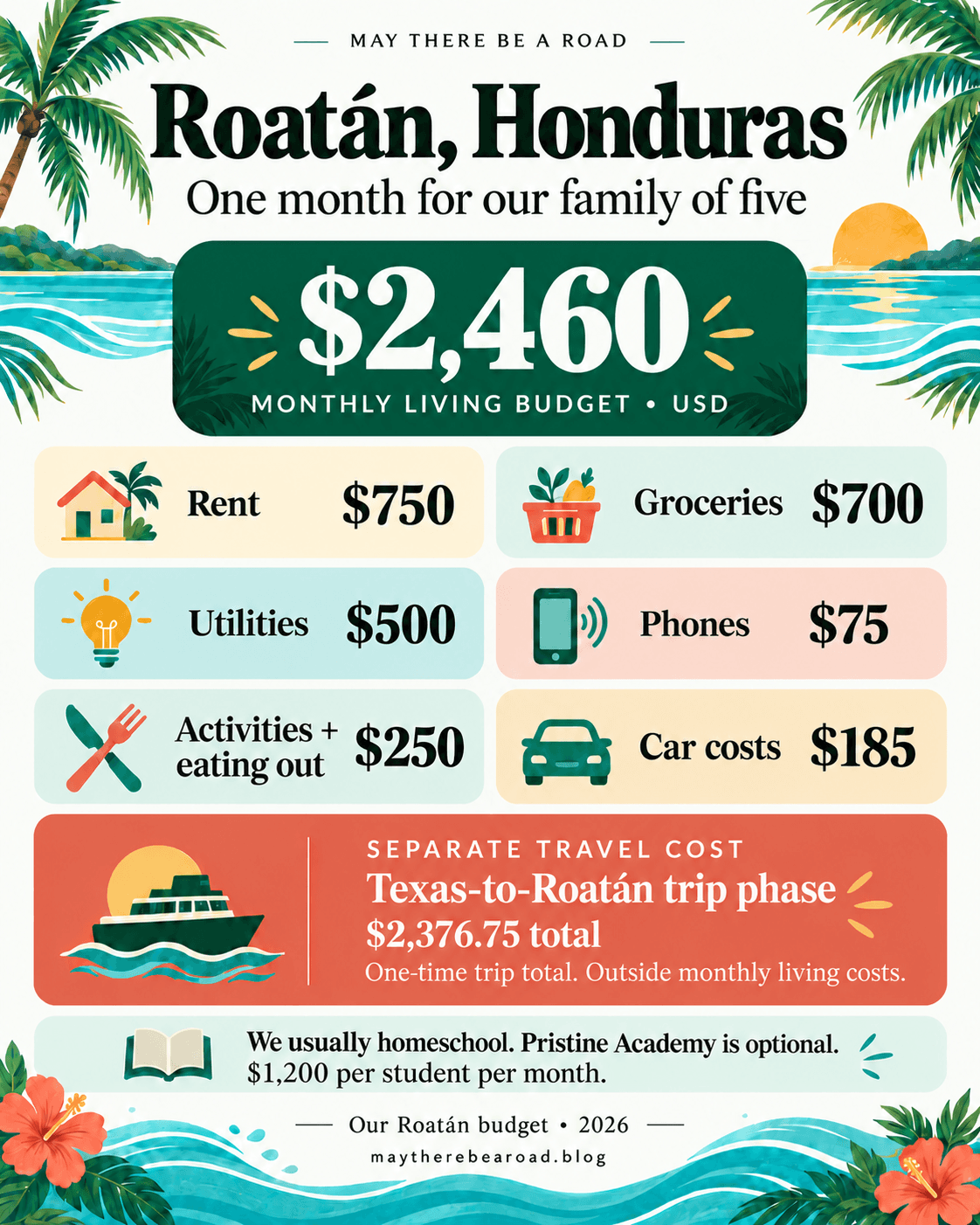
For our family of five, the monthly budget we planned for living on Roatán was about $2,460. The property owners told us utilities would run between $300 and $500 a month, depending on how much we used the AC, so we budgeted $500.
Our final selected spending averaged $3,124.41 a month over our two-and-a-half-month stay. The utility bill was the biggest reason it exceeded our plan. Two AC-related issues pushed utilities well above our $500 monthly allowance, and we explain them below. The one-time travel phase from Texas to Roatán is separate from the monthly living total.
We drove the RAV4 from Texas, crossed into Honduras on June 1, 2026, and stepped onto Roatán the next day with all five of us and our dog, Lady. We stayed two and a half months in a furnished apartment on the rural east end of the island. We keep the one-time cost of getting there separate from our monthly living costs. Read our Texas-to-Roatán travel breakdown.
Rent
The full-month rate was $750. We had a three-month contract, but when we asked to leave early, the property owners agreed to $500 for our shortened final month. Our final ledger records $2,000 in rent across the stay: two $750 payments and the $500 final payment. The apartment came furnished and was set up for a family our size, with four beds, a single bathroom, and laundry in the unit. Coming out of an RV, it didn’t feel cramped. Sharing one bathroom between five people was the hardest part, and it still wasn’t bad. We prefer keeping things simple anyway. Space is one line where family size shows up in the rent, though a couple might end up in the same size place we did.
What’s available on the island covers a wide range. Prospera has places around $2,000 a month, give or take a couple hundred. Those are nicer and come with direct access to all of Prospera’s facilities, and they sit at the end of the market where you find what people call gringo pricing, the rates set for tourists rather than for people living there. Most of the $2,000-and-up and luxury listings fall in that group. Through Facebook Marketplace and the local groups we saw places running anywhere from $400 to $1,500 a month.
Utilities
The property owners told us total utilities would usually run between $300 and $500 a month, depending on how much we used the AC. We used $500 a month in our planned budget, or $1,250 for our two-and-a-half-month stay.
The final ledger records $2,342.62 for the rental utility and move-out settlement, including the deposit credit. That is $1,092.62 above our $1,250 allowance. The full utility category is $2,417.94, or $1,167.94 above the allowance, because it also includes $75.32 of Starlink used during the trip. We had no cooking gas bill.
We estimate two issues caused the unusually high rental bill. A faulty compressor/pump kept running around the clock for about two weeks while the indoor unit was off. That was outside our control. The other issue was our choice to keep the rental cool while we were away, based on an assumption we brought from home. That was our mistake. The ledger does not show how much either issue added.
Ask the property owners how electricity is billed and whether the AC shuts down fully when switched off. Ask what they normally do with the AC when they leave the house. We wish we had checked before signing.
What We Actually Spent
We included $7,811.02 in Roatán-period spending in this post. Across two and a half months, that averaged $3,124.41 a month. It includes the full utility category and $150 for Lady’s border paperwork, listed separately under dog costs. It leaves out $389.18 in donations, mail and shipping, clothing, and household purchases we chose to make. School and the one-time Texas-to-Roatán travel phase are separate.
Groceries
We budgeted about $700 a month for groceries. Looking at the whole stay, our final ledger puts food and groceries at $1,993.77, or about $798 a month over two and a half months. That includes drinking water and Lady’s food, plus the estimated cash assigned to groceries.
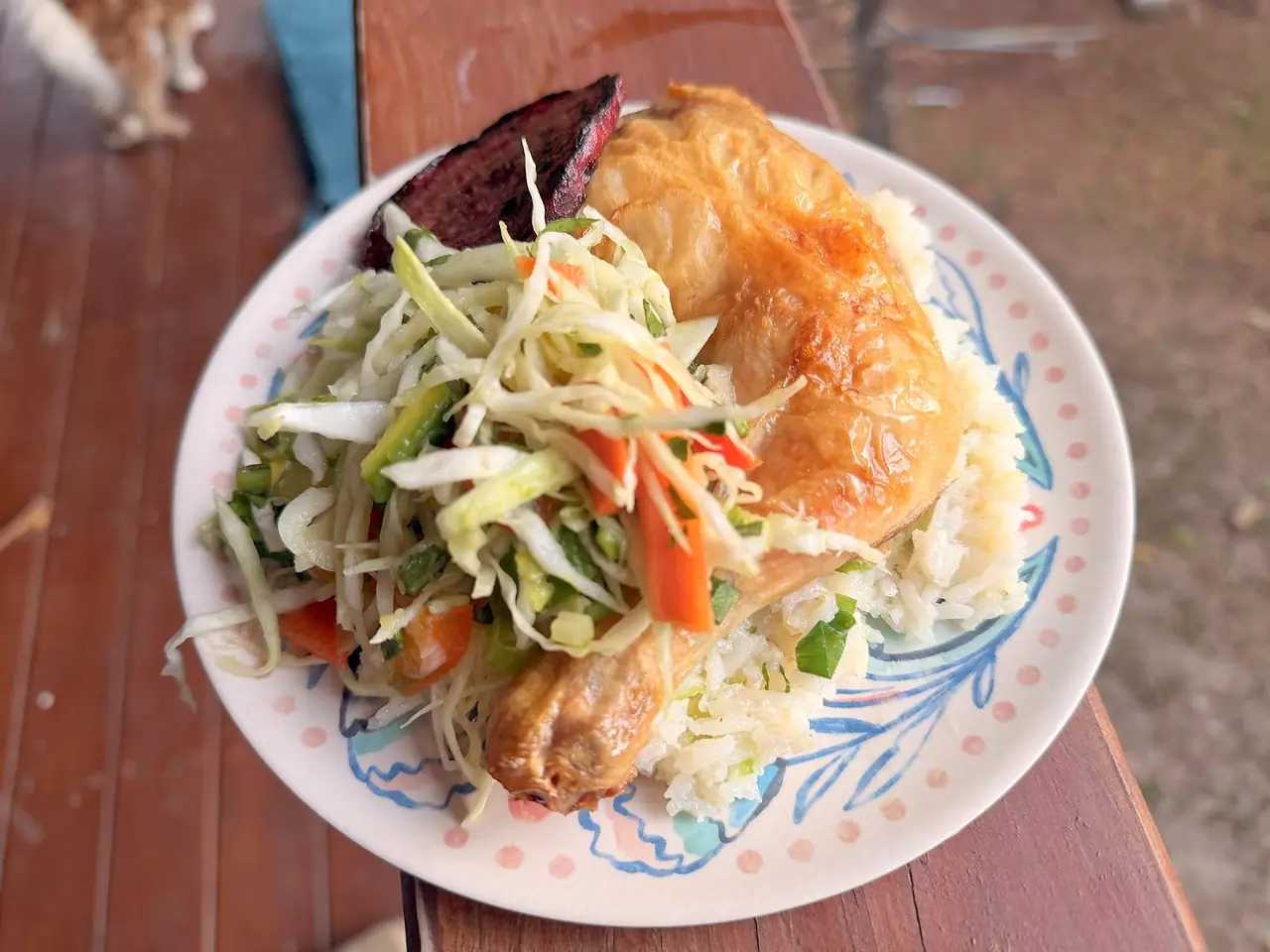
We ate simple. Chicken quarters ran about $1 a pound and pork about $2. Local produce is cheap and everywhere: rice, tomatoes, onions, potatoes, sweet potatoes, yucca, peppers, avocados, papaya, bananas, pineapple. Coconuts you pick yourself. Our number could run 50 percent higher, maybe closer to double, if you’re buying imported groceries instead. Food is the line that moves most with family size.
Phones
We came off a roughly $220 a month T-Mobile family plan back home and worked through a couple of local SIM options, Tello first, then Claro, before landing on Roamless. Tello runs $5 to $8 a month and is the simplest switch from a US provider, and it lets you keep calls on your American line. Claro is about $8 per fifteen days, so call it $16 to $20 a month, and it’s the better choice if you want more data to work with. Roamless you buy in chunks of $20 or more and it lasts until it runs out, which works well if you use data only when you need it and hook to wifi the rest of the time. We pay for three lines, Eden’s and our own two, since the younger boys don’t carry phones, so we land at $60 to $90 a month for the family.
What That Adds Up To
Rent, groceries, utilities, and phones made our planned baseline about $2,025 a month for our family of five. Adding about $250 for activities and eating out brought it to roughly $2,275. With around $185 for the car, our planned total was $2,460 a month. We used the high end of the property owners’ utility estimate, $500 a month. One-time travel costs and school are not included in this monthly living budget.
Getting Around
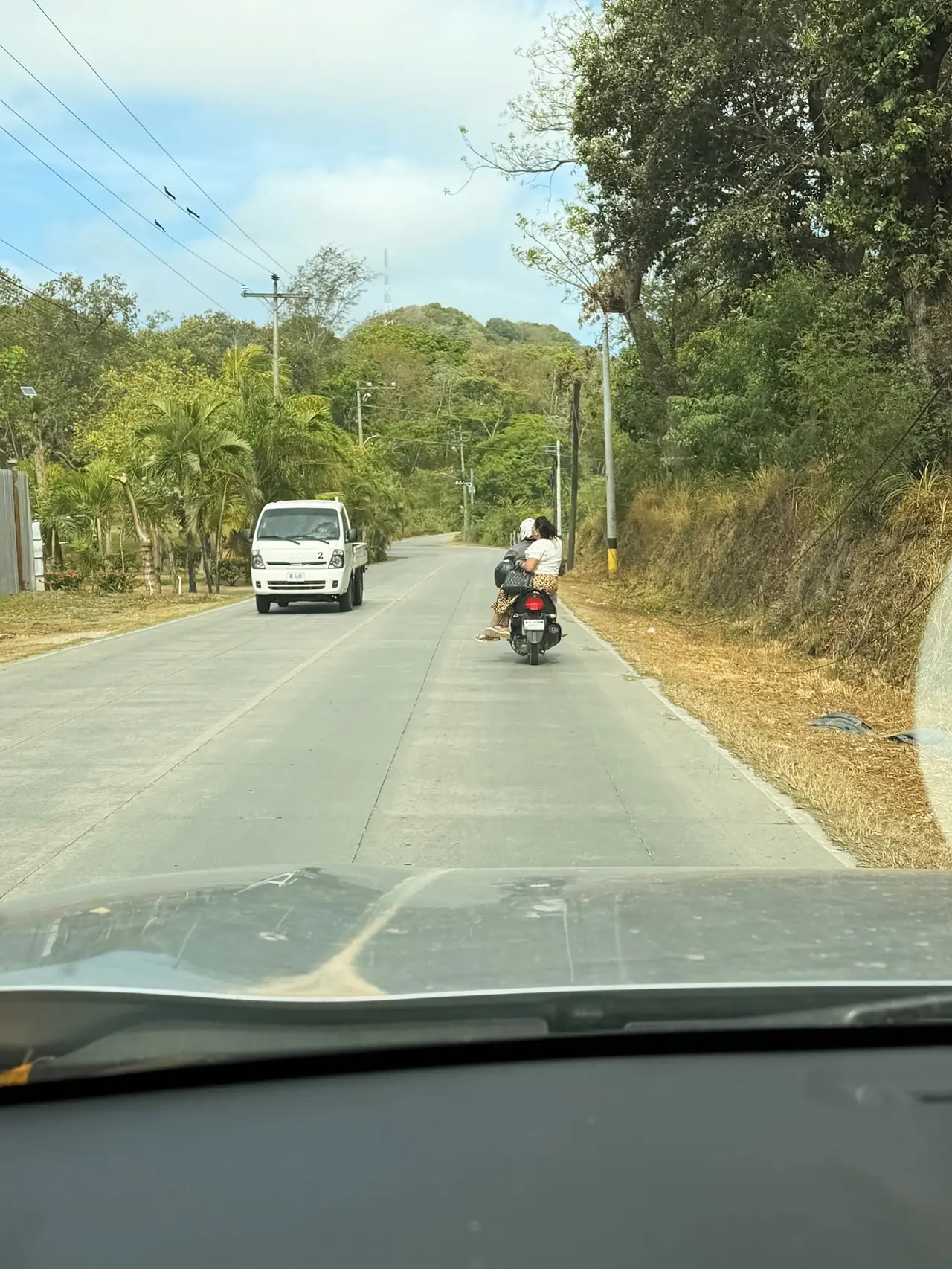
We drove down, so we had the RAV4 with us the whole time. Most families we’ve met don’t. We drove every day. We crossed the island three to five times a week, took Sunday drives exploring one end to the other, and covered the whole east side. Fuel still stayed under $100 a month. The roads are slow, so an hour-long drive doesn’t cover many miles, and we never burned much fuel no matter how long we spent in the car.
Insurance is two policies, $400 a year for a Farm Bureau policy back home kept in garage mode while the vehicle is out of the country, plus $50 a month for Central America coverage, so about $83 a month combined. We had one repair the whole stay, a loose fender well and an undercarriage cover from some off-roading, plus new sway bar links we already had the parts for. Labor came to 900 lempira, about $34, paid in cash. Call it $180 to $200 a month to keep a car on the island.
If you don’t bring a vehicle, taxis add up fast and get cost-prohibitive when you’re moving a family around every day. Renting is the other option. We’ve seen people say around $1,000 a month for a car, and there are a few companies advertising out there. Ask for the monthly rate every time. A daily rate, or a weekly rate multiplied out to a month, always comes out higher once you add it up, and that gap is a lot of what makes slow travel affordable in the first place.
Our workbook puts the full Texas-to-Roatán travel phase at $2,376.75. That one-time trip-phase total is separate from our monthly living costs and includes spending assigned to that travel phase, not only the drive and inbound ferry. Ferry and port taxes for both crossings totaled $816.38: $410.78 on the way to Roatán and $405.60 when we left for Guatemala. The outbound crossing was part of our later trip from Roatán to Guatemala.
School
We usually homeschool as we travel. Pristine Academy is an option for families in Roatán. Full-time tuition is $1,200 per student per month. School is not included in our planned budget or selected actual-spending total.
Health Insurance
We did not carry health insurance, and no medical needs came up for the five of us during the stay. Lady’s $150 border paperwork was a dog expense, not a medical expense, and we list it separately. If you want coverage, we have seen full-time traveler health insurance for a family run $200 to $300 a month, sometimes more.
Moving In and Moving Out
We put down a $750 security deposit going in and did not receive it back as cash. It was credited toward the utility and move-out settlement. There was also a $100 cleaning fee when we left. The settlement came due as one lump sum after we had already left the island, which is worth knowing if you plan to leave the country when your lease ends.
Finding the Place
Facebook Marketplace and the local Facebook groups were the best tool we had, by a wide margin. We also reached out to a few property management companies directly, which mostly got us gringo pricing, quotes clearly aimed at foreigners. We did hear about a few other places with realistic prices, but we didn’t see those until we were inside the Facebook groups. The groups are where we’d start again, and the management companies are still worth a call, since they sometimes have access to places you won’t come across otherwise.
Activities, If You Want Them
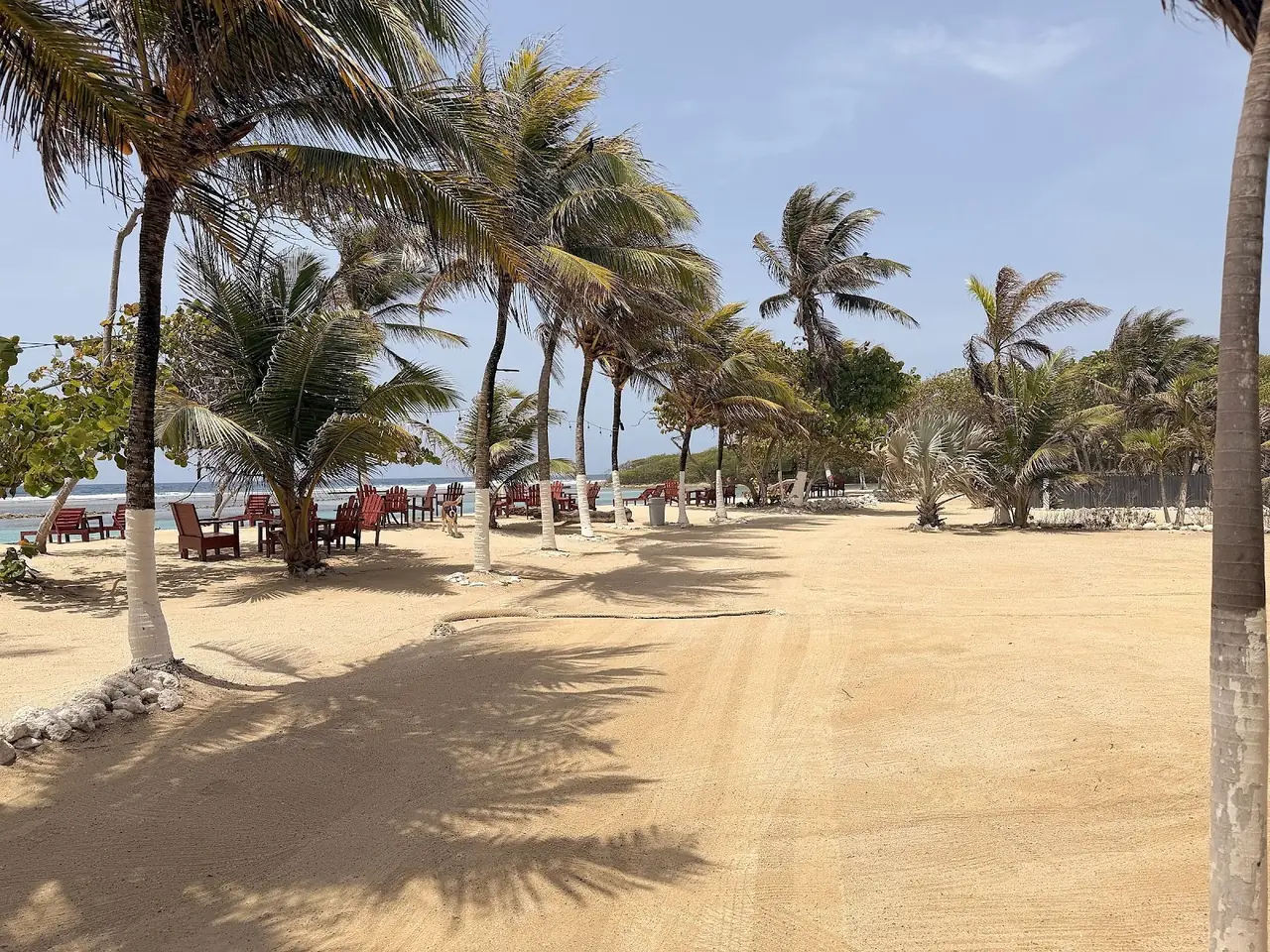
Most of what we did was free or close to it. Most of the beaches are free, and even some of the private ones will let you in on non-cruise days if you buy something from the restaurant. That was usually a couple of drinks or one meal we shared, which put us at $10 to $15 most times and $20 at the most. AJ’s, a small sloth and monkey hangout, was $15 a person at any age. We negotiated a good rate on a boat day that included the mangrove tour, a stop at the turtle rescue, and a quick restaurant stop, $75 plus tip, and then $25 for our whole family to get in at the turtle rescue. Chairs and a table at Camp Bay run $5 to $20 depending on the vendor, or nothing if you bring your own. We also did some hiking around Old Port Royal and stopped at the Garifuna Village, which is free to walk through and inexpensive if you eat there. Mangoes and coconuts you pick yourself. Activities and eating out together came to around $250 a month, on top of the groceries. Budget whatever fits your family on top of the baseline above. We ended up putting every beach we could get to into its own guide, free ones and paid ones, east to west across the island. Everything we did that wasn’t a beach is in a separate guide.
Common Questions
How much does it cost to live in Roatán with a family?
Our planned monthly living budget for our family of five was about $2,460. Over our two-and-a-half-month stay, the selected spending in this post totaled $7,811.02, or $3,124.41 a month. It includes the recorded utility category and $150 for Lady’s dog paperwork, which we list separately. It excludes $389.18 in donations, mail and shipping, clothing, and household purchases we chose to make. School is not included. The Texas-to-Roatán travel phase was $2,376.75, a one-time cost outside the monthly living total.
What does rent cost in Roatán for a family?
We paid $2,000 in rent: two $750 monthly payments and a $500 final payment. We had a three-month contract, but when we asked to leave early, the property owners agreed to $500 for our shortened final month. Across the island we saw rentals from $400 to $1,500 a month through Facebook Marketplace and local Facebook groups. Prospera runs around $2,000 a month with access to its facilities, and some higher listings use tourist pricing.
How do you find a rental in Roatán without paying tourist prices?
Facebook Marketplace and local Facebook groups were the method we actually used. Property management companies mostly quoted us gringo pricing. We did hear about a few other places with realistic prices, but we didn’t see those until we were inside the Facebook groups.
What do utilities cost per month in Roatán?
The property owners told us total utilities usually ran between $300 and $500 a month, depending on AC use. We budgeted $500 a month, or $1,250 over our two-and-a-half-month stay. Our ledger records $2,342.62 for the rental utility and move-out settlement, including the deposit credit, which was $1,092.62 above the allowance. The full utility category was $2,417.94, or $1,167.94 above, with $75.32 in trip Starlink included. We estimate two issues drove the unusually high rental bill: an AC compressor/pump ran around the clock for about two weeks while the indoor unit was off, and we chose to keep the rental cool while away. The ledger does not tell us how much either issue added. We had no cooking gas bill.
Do you get your deposit back?
We did not receive our $750 deposit back as cash. It was credited toward the utility and move-out settlement, which we paid as one lump sum after leaving the island. There was also a $100 move-out cleaning fee.
How much are groceries in Roatán for a family of five?
We budgeted about $700 a month for groceries. Our final ledger records $1,993.77 over two and a half months, or about $798 a month. That includes drinking water, Lady’s food, and the estimated cash assigned to groceries. Chicken quarters were about $1 a pound and pork about $2. We bought local; imported groceries could run 50 percent more, maybe closer to double.
What does cell phone service cost in Roatán?
Tello runs $5 to $8 a month and is the easiest switch from a US provider, and it keeps your calls on your American line. Claro runs about $8 per fifteen days. Roamless is bought in chunks of $20 or more that last until they run out. Three lines for our family came to $60 to $90 a month.
Do you need a car on Roatán?
We drove daily and crossed the island three to five times a week. Fuel stayed under $100 a month because the roads are slow and hours behind the wheel do not add up to many miles. Keeping a car cost us roughly $180 to $200 a month. Our workbook puts the full Texas-to-Roatán travel phase at $2,376.75, separate from monthly living costs. Ferry and port taxes for both crossings totaled $816.38: $410.78 on the way to Roatán and $405.60 when we left for Guatemala. The outbound crossing was part of our later Roatán-to-Guatemala trip. Without a car, taxis can become cost-prohibitive for a family moving around daily. We have heard rentals can run around $1,000 a month, though we did not rent one ourselves.
What does school cost in Roatán?
We usually homeschool. Pristine Academy is an option for families who want full-time school. Tuition is $1,200 per student per month and is not included in our cost figures.
Do you need health insurance in Roatán?
We did not carry health insurance, and no medical needs came up for the five of us during the stay. Lady’s $150 border paperwork was a dog expense, not a medical expense; we list it separately. If you want coverage, we have seen family traveler health insurance run $200 to $300 a month.
What do activities cost in Roatán with kids?
Most beaches are free. Some private ones let you in on non-cruise days if you buy something from the restaurant, typically $10 to $15. AJ’s is $15 a person at any age. We negotiated a boat day covering a mangrove tour, a turtle rescue stop, and a restaurant stop for $75 plus tip. Camp Bay chairs run $5 to $20, or nothing if you bring your own. Activities plus all our restaurant eating came to about $250 a month.
Would We Do It Again
Yes. Our planned budget of about $2,460 a month for living on Roatán is still a number we’d take again. Our utility settlement came in far above the $500 monthly allowance after two AC-related issues. One was outside our control and one was our mistake. Now we know to ask how electricity is billed and how the AC is handled before we sign.
May there be a road.
Related posts

Get new posts by email, a few times a month, nothing else.
May there be a road.