Roatán Beaches: Which Are Free, and What the Rest Cost
Preston Clark
·
·
17
min read
·
Roatán, Honduras

Written for
World travel families
·
RV families
We showed up on Roatán expecting beach access to work the way it does most places: a few free public beaches, and then resorts charging a day pass that costs more than a tank of gas. It took us most of a week to figure out that's not how this island runs. A lot of the best beaches here are just free. Others will let you in for the cost of lunch, if you know to ask.
We spent close to ten weeks based on the rural east end of Roatán, driving the island end to end several times a week. This covers every beach we know of that a family here for a week or a month could get to, not only the ones we spent a full day at. Some of them we swam at ourselves. Others we know from locals or resort staff, or from seeing them off a boat or from the road. A few we never got near, and where that's the case we say so and tell you where the information came from instead.
One thing that surprised us more than the pricing is that almost the entire island is calm water. Camp Bay and Paya Bay are the only two beaches we found with any real waves at all, and even those are small by any serious ocean standard. Everywhere else, even beaches that face straight out to open ocean, the reef offshore blocks the swell before it ever reaches the sand. That matters more than any "family friendly" label could, because it means the honest answer to "can my kid actually stand up in this" is almost always yes, and we'll tell you exactly where the two exceptions are.
We don't publish our exact address on the island, but everything below is grounded in the rural east end, where we actually lived, and the drives we made from there.
Here's the fast version, running east to west across the island, with what each place costs. The rest of the post follows the same order.
Beach | Where | What it runs | How we know it |
|---|---|---|---|
Camp Bay | Far east end, north shore | Free to walk in; vendor chairs $5–$20, negotiable | Lived, our most-visited beach |
Paya Bay (free side) | Far east end, just past Camp Bay | Free | Lived |
Paya Bay Resort | Far east end | ~$20/person resort fee, includes $15 food/drink credit, kids free | Lived |
Czech Village | Caribe Point, south shore near Jonesville | Free | Lived, creature-hunting spot only, not a swimming beach |
Media Luna | Caribe Point, south shore | Day pass roughly $165–$190/person, packaged with transport, buffet, drinks, and three snorkeling stops | Researched only, no visit |
Parrot Tree Beach | Parrot Tree Plantation, south shore just east of French Harbour | Unconfirmed, gated community, contact directly | Researched only, no visit |
Pristine Bay | French Harbour, north shore | Restaurant patronage; beach access not separately priced that we saw | Lived |
Little French Key | Its own island, boat from French Harbour | Posted ~$60/person, locals quoted ~$40, we paid ~$25 by asking | Lived |
Fantasy Island | Its own island near French Harbour | Was closed after a March 2026 fire; booking again now, confirm before planning | Seen only from a boat, plus research |
Curación Beach Resort | Brick Bay, near Coxen Hole | Pay-as-you-play, ~$30 for food and drinks buys a half day | Lived, our favorite paid spot on the island |
Barefoot Cay | Brick Bay | $30/person, all consumable credit, Mon–Fri 10am–2pm only | Rules only, we were turned away before using it |
Las Palmas | Dixon Cove, near Coxen Hole and the airport | Restaurant patronage | Lived, our least favorite of the beaches we visited |
West Bay | Western tip | Free at the far end; $10/person non-cruise, $25 cruise day at beachfront restaurants | Lived |
Bananarama (West Bay) | Western tip | Free with a drink purchase, non-cruise days; ~$25/person cruise day | Secondhand, from the resort's own staff |
Starfish Alley | Between West Bay and the West End | Free from shore; short boat ride from West Bay | Secondhand plus outside research, we did not snorkel it |
Half Moon Bay / West End | West End village | Free | Lived |
Turquoise Bay Resort | Milton Bight, north shore | Unconfirmed, contact directly | Researched only, no visit |
Blue Bahia Beach Grill | Sandy Bay, north shore | Unconfirmed, contact directly | Researched only, no visit |
The Sunken Fish / Tranquilseas | Sandy Bay, north shore | Unconfirmed, contact directly | Researched only, no visit |
Now the longer version, east to west.
The far east end: Camp Bay and Paya Bay
Camp Bay is the beach we kept coming back to, more than any other, and it's completely free. There's a vendor who sets up chairs and picnic tables and will quote you anywhere from five to twenty dollars depending on his mood that day, but it's always negotiable, and if you skip the chairs entirely, he leaves you alone. He also sells snacks and cold drinks off a posted menu, sodas and chips mostly, sometimes hot food, and there are bathrooms on site. We usually brought our own gear and never paid more than we felt like paying.
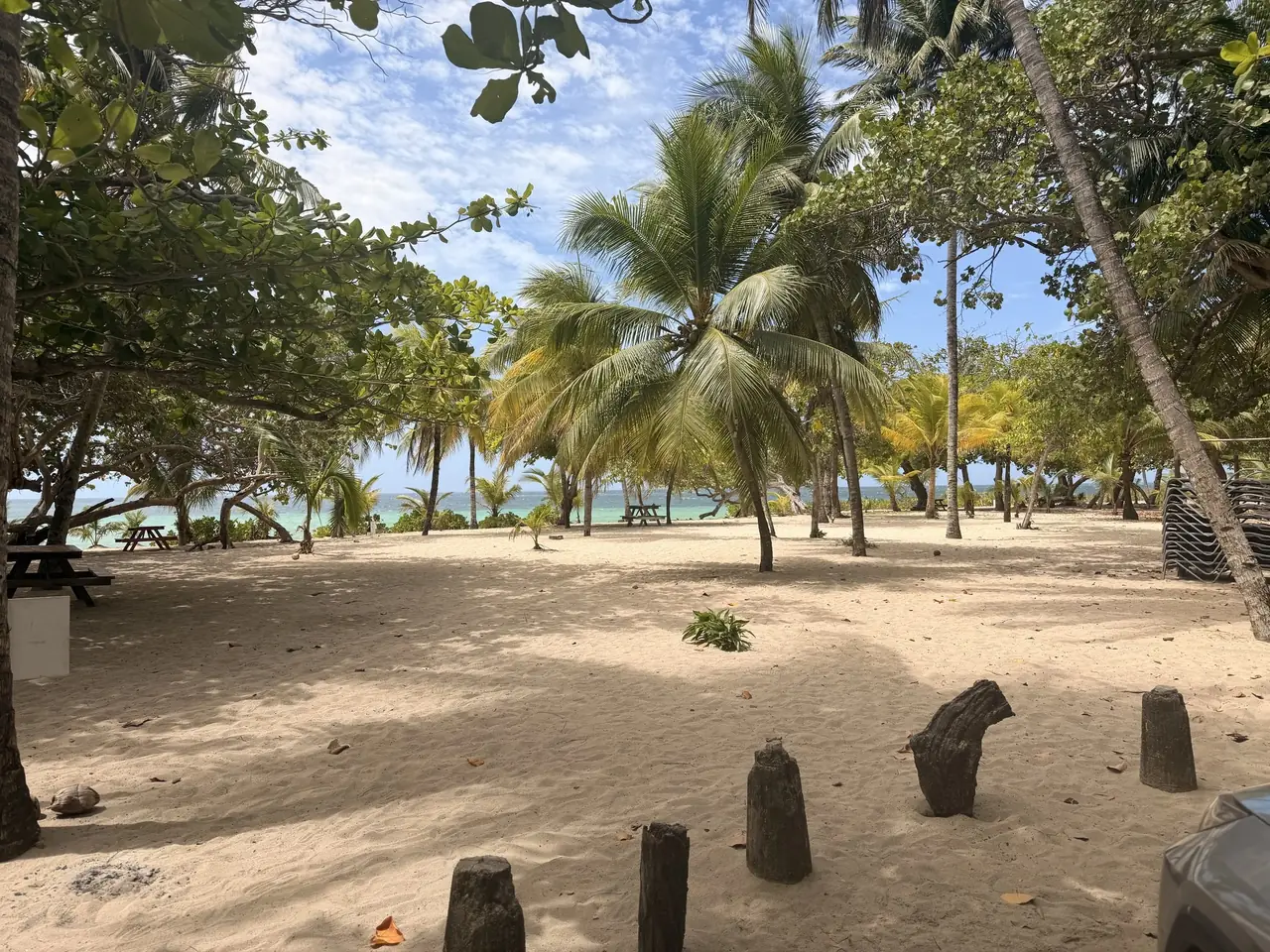
The drive out from Coxen Hole, where most of the cruise ships dock, took us about thirty-five to forty minutes, and Google and the taxi drivers will both quote you longer. The road is mostly paved now, with one stretch of graded dirt that's been shrinking every month we've been here as crews keep paving it. None of it slowed us down much.
The thing about Camp Bay is what's behind the sand. Walk twenty feet back from the water and you're standing in a coconut and mango forest, full shade, still sandy underfoot. Nobody's manicured it. We bought our own machete at a little shop near the bottom of Diamond Hill for about four dollars, and we'd spend afternoons cutting open coconuts that had already fallen and drinking straight out of them. We stopped bringing drinks from home entirely.
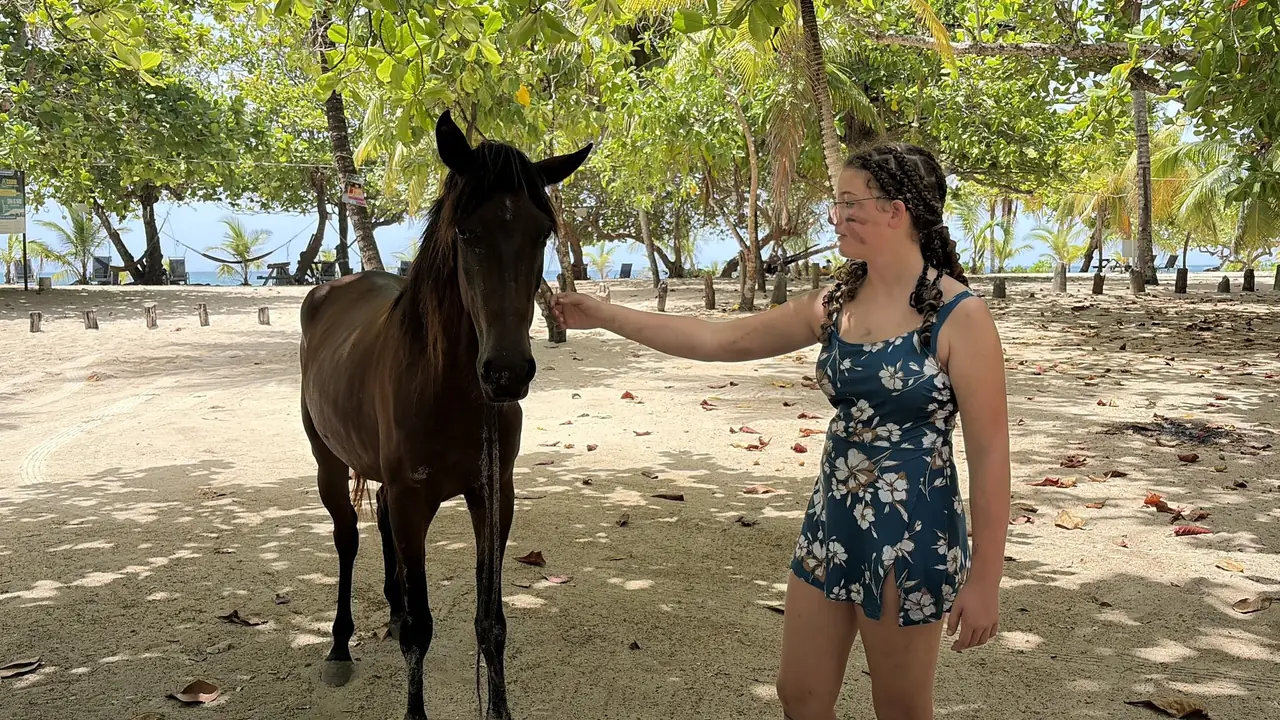
The water is shallow and calm near shore, dropping to about two feet in places before opening up, with sand for the first thirty yards and seagrass beyond that. Camp Bay does catch more wind than almost anywhere else on the island, usually building through the middle of the day, and along with Paya Bay it's one of the only two beaches on Roatán where we ever saw real waves. Most of the island sits behind enough reef that even open-ocean-facing beaches stay flat; Camp Bay and Paya Bay are exposed enough that the wind actually raises a little chop. It's still small by any serious ocean standard, and our nine-year-old actually likes getting knocked around a little in it. Mornings are calmer if you want glassy water.
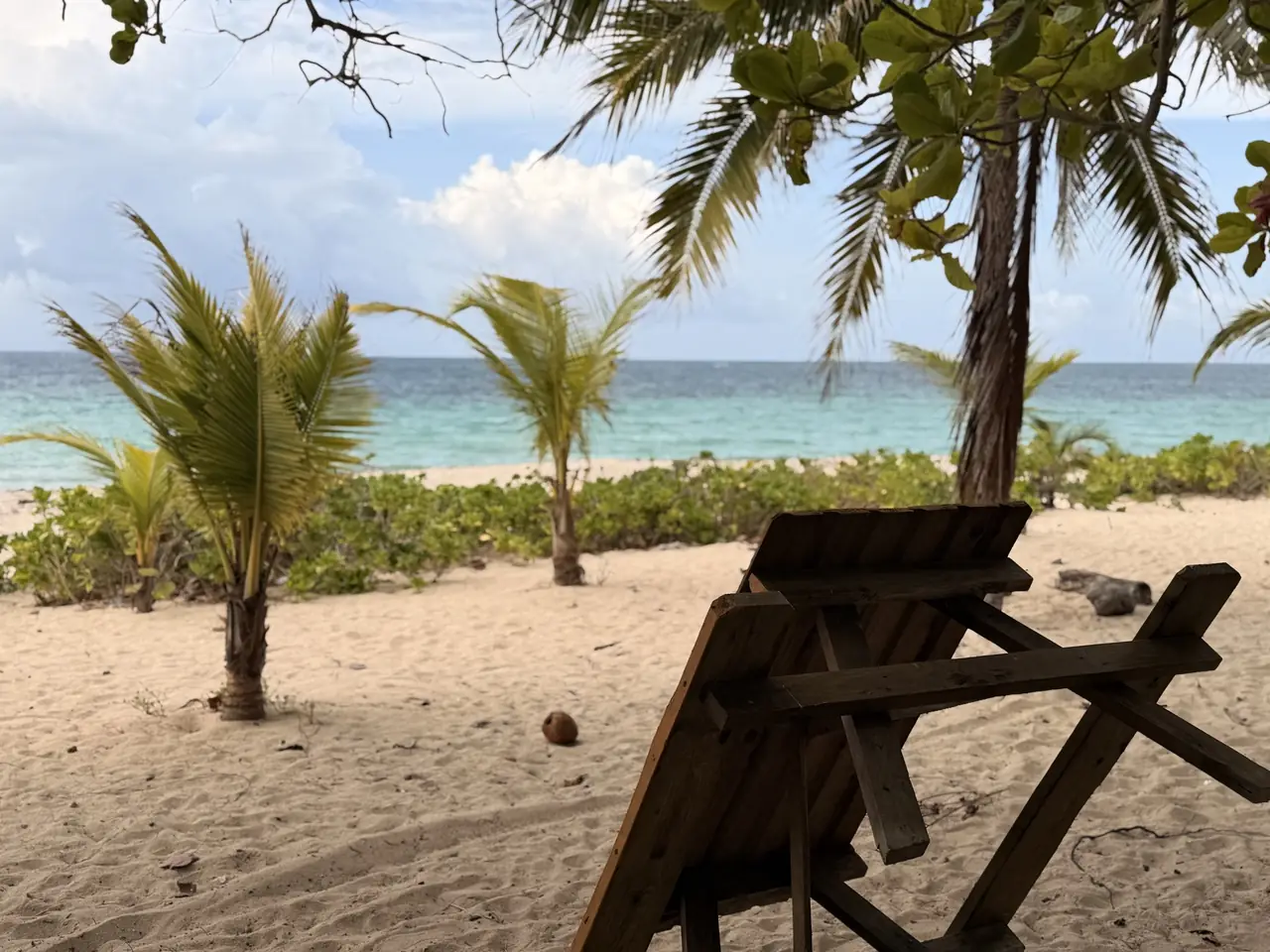
We did swim out to the reef once, about a hundred and fifty yards offshore. It's a real swim, not a wade: the water gets deep and cloudy before a coral wall rises up out of nowhere to within a few feet of the surface. Wind picks up the farther out you go, and you cross a stretch where boats come through, so it's worth keeping your head up. If you're not a confident swimmer, take a boat out to the reef instead of swimming for it. Or just stay on the sand, which is what Camp Bay is best at anyway, and it doesn't cost you anything.
We didn't know until we looked it up later that Camp Bay and Half Moon Bay are the only two beaches on Roatán carrying Honduras's Bandera Azul Ecológica certification for water quality and beach management, and they've held it three years running. It tracks with what the water actually looks like at both.
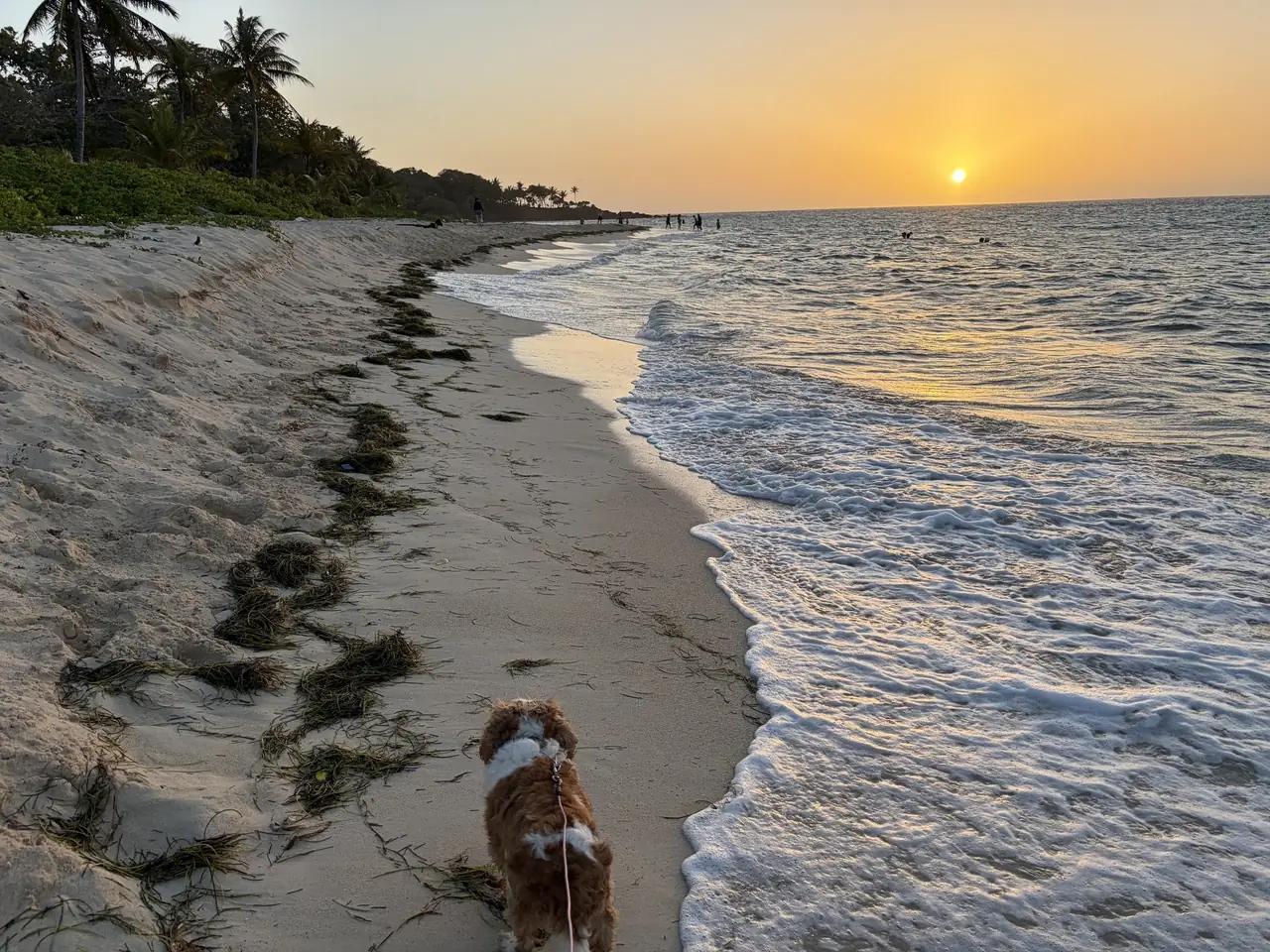
Paya Bay sits just up the road, and it's where we actually went most mornings, usually between six and seven, because it's close, it's free, and it's a good place for a kid to hunt crabs and small creatures before the day gets hot. We won't pretend it's a great beach in its own right, though. It's not as well kept as Camp Bay: there's more trash and organic buildup, especially on one end, and it's a bay rather than open coast, so the wind is a little more subdued but still present. If you've already made the drive this far east, go the extra few minutes to Camp Bay instead.
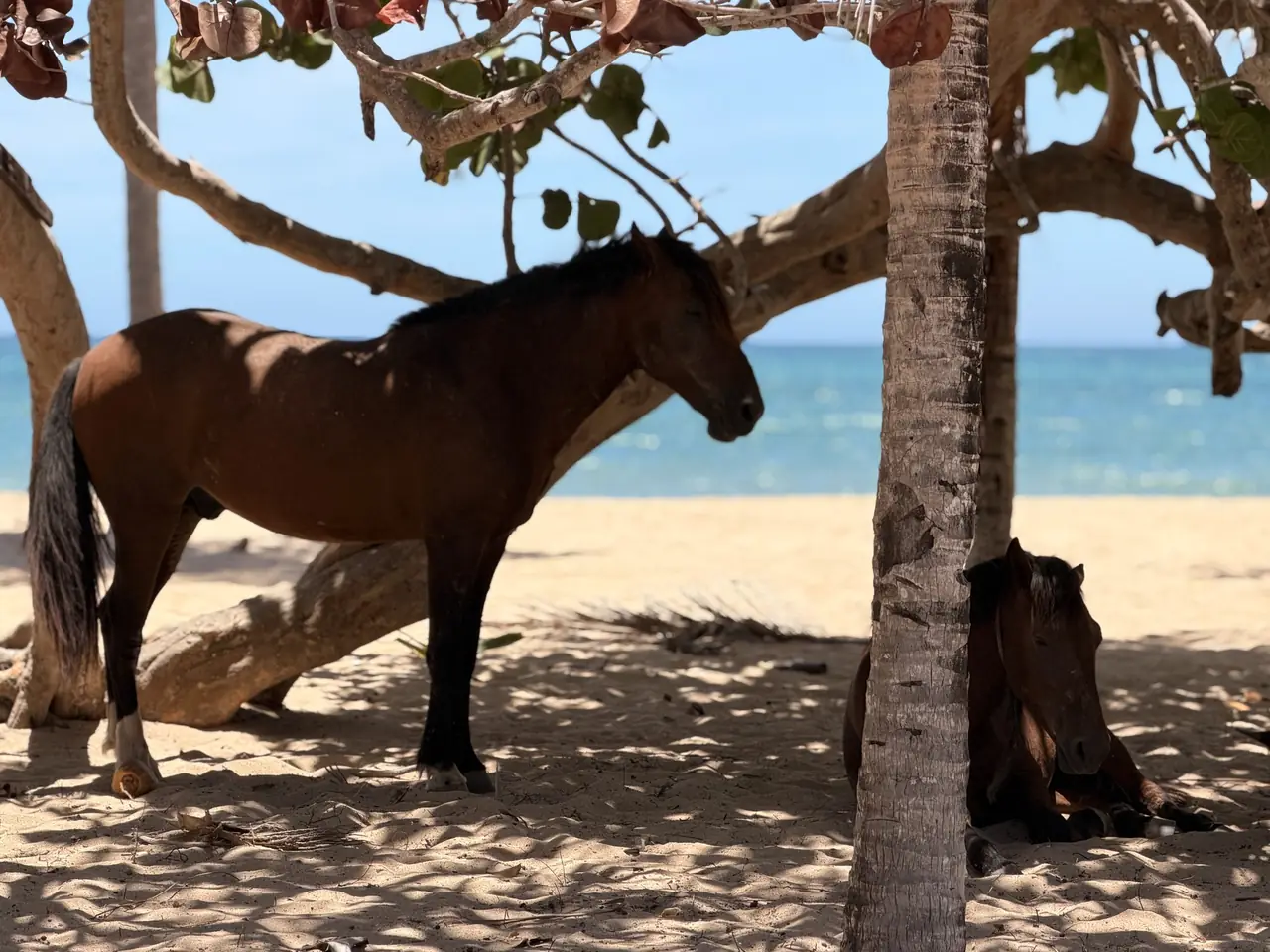
Paya Bay Resort sits on the bluff above that free beach. What we didn't realize is that it's clothing optional. We didn't know that when we first drove up, and we had the kids with us. Luckily the place was empty that day. We went back a couple of times after, hoping to catch it quiet again. Sometimes it was and sometimes it wasn't, and on the days it wasn't we didn't go in. On the days it was, the property is worth the stop.
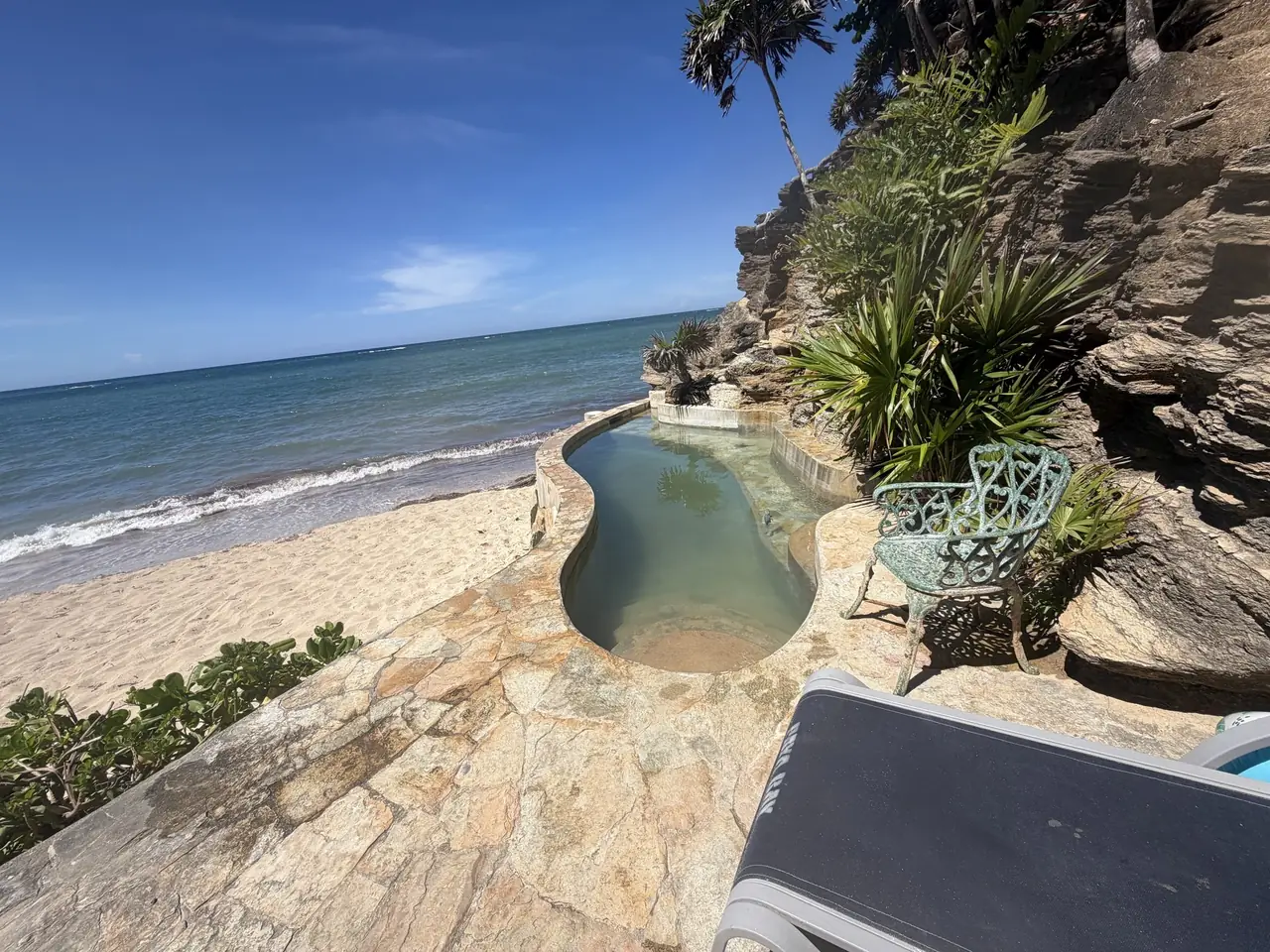
There are three beaches on the grounds. One of them is nude only and we never walked it. The other two are the clothing-optional ones. One of those sits in a cove as pretty as anything we saw on the island, with a small pool built into the rock right at the waterline and the restaurant on the level above it. Day use runs about twenty dollars a person, fifteen of which comes back as credit at the restaurant, and kids are free. Just go knowing what it is.
Mid-island, south shore: the Czech Village, Media Luna, and Parrot Tree
Heading back west along the south shore, out past Jonesville, is a spot locals call the Czech Village, in the Caribe Point area. It's a residential subdivision, not a beach destination, and you get to the water by driving in past a cluster of empty lots to where the road turns private. Nobody swims there, but there are crabs, more of them than anywhere else we went on the island, including a small species with one oversized claw that we never found anywhere else. Mangroves on one side, open water on the other, and a tide line our kids worked over for a couple of hours at a stretch.
Two places along this same road we can only tell you about from research. Media Luna, also at Caribe Point, sells a day pass rather than letting you walk in, somewhere between a hundred sixty-five and a hundred ninety dollars a person, and it's built as an excursion: round-trip transport, a buffet meal, drinks, and a few stops for guided snorkeling. That puts it in a different category from everything else on this list. Parrot Tree Beach, further west in the Parrot Tree Plantation development, has a beach and a sheltered lagoon that people who stay there rate highly, but it's a gated community and we couldn't find anything published about whether visitors who aren't staying there can get in.
French Harbour: Pristine Bay, Little French Key, and Fantasy Island
Pristine Bay is the best-groomed beach we saw anywhere on the island. There are pools set just above the sand and a restaurant right there, where we ate, and water toys down on the beach the kids got into. The view is as good as any on Roatán and it's where we came away with our best pictures. It's also the most polished place we spent time at, and it didn't feel much like the rest of the island to us.

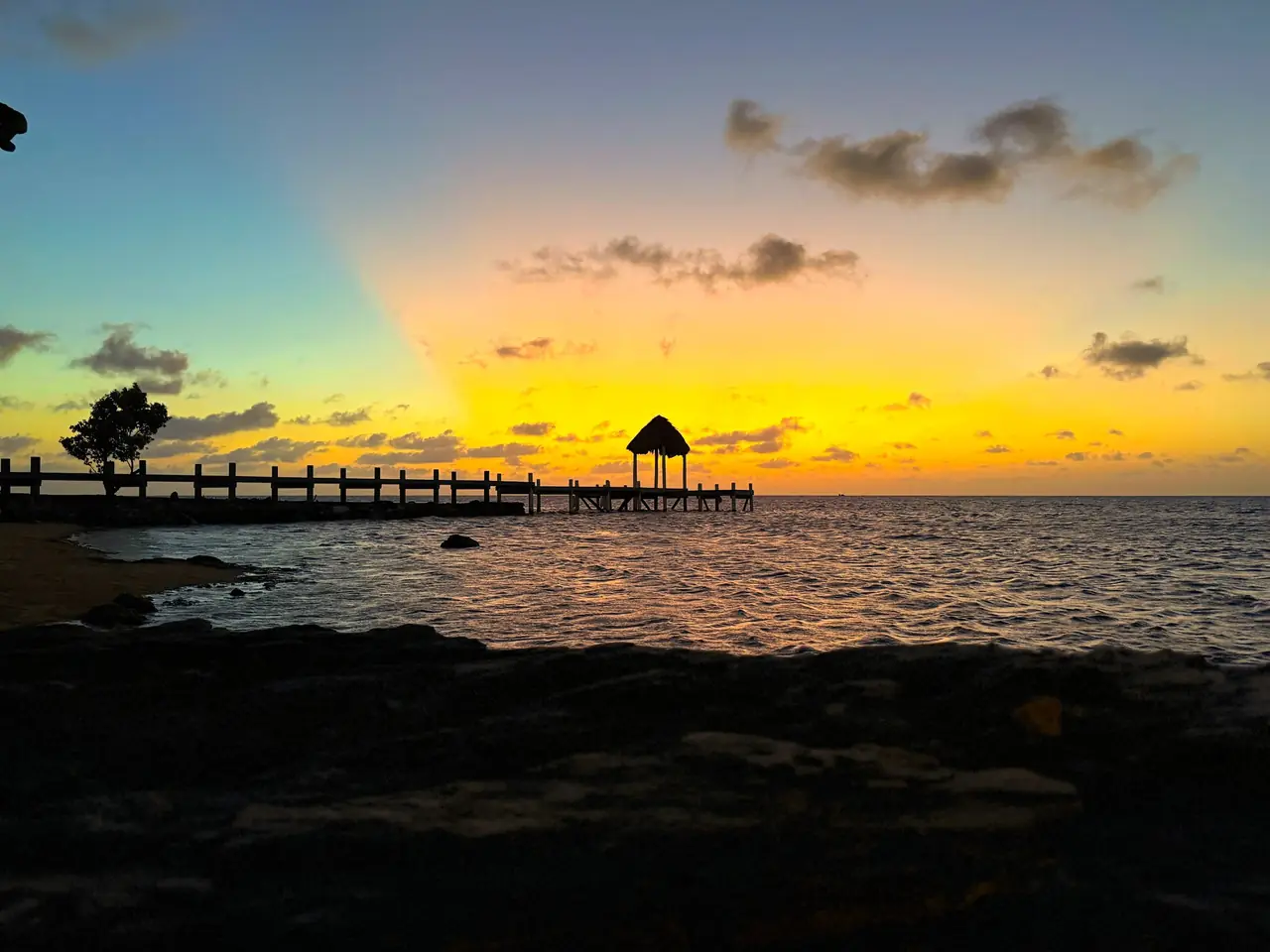
Little French Key sits on its own small island, a short boat ride out from French Harbour, and it's the closest thing to a full resort beach day that we found anywhere on Roatán. Our kids snorkeled underneath the property's over-water buildings and spotted lionfish and a lot of other fish down there. They swam with the resort's pigs. There are horses you can ride along the sand, and a platform set about fifteen feet above the water to cannonball off. Inside a mangrove channel on the property we found lobsters bigger than anything we'd seen elsewhere on the island, in real numbers.
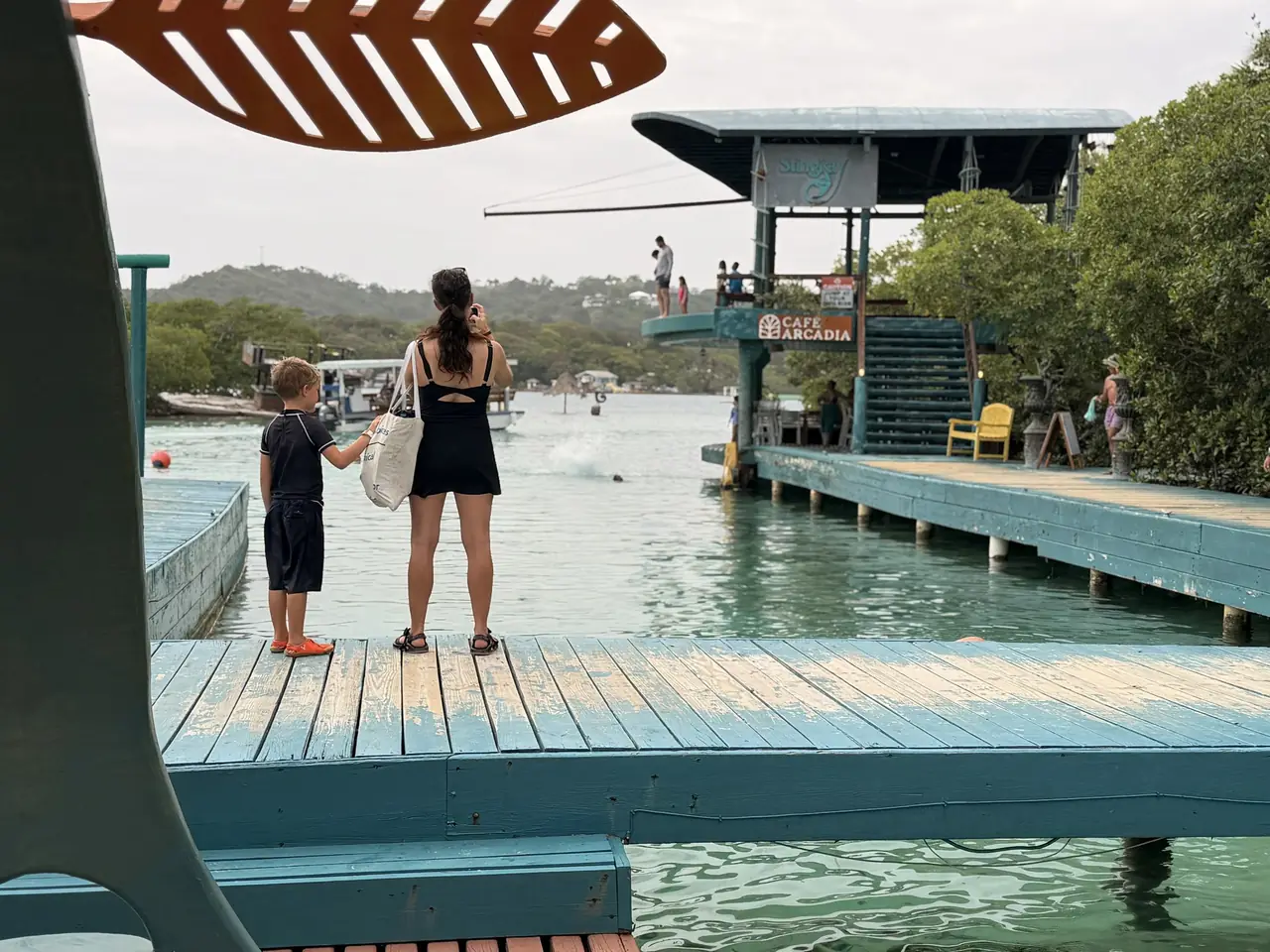
The posted price runs steep, close to sixty dollars a person on a cruise day. We asked for the local rate instead of the tourist one and were quoted around forty, then negotiated down to about twenty-five a person just by showing up and asking. It's a manicured, developed experience, so go in expecting a resort day. For what it is, we wouldn't skip it.
On the boat ride out to Little French Key, we passed Fantasy Island, a resort on its own small island in the same stretch of water. It was closed and we couldn't get onto the property, so all we have is what it looked like from the water, which was beautiful. We found out afterward why it was closed. A fire in March 2026 damaged a good part of it, the lobby, the restaurant and kitchen, several bars, and about a third of the rooms. Nobody was hurt, and the dive center and most of the rooms came through it. The resort is listing rooms and excursions again, though we never saw an announcement of a reopening date and we can't tell you from experience what's actually running. Call them before you plan a day around it.
Coxen Hole and Brick Bay: Curación, Barefoot Cay, and Las Palmas
In the Brick Bay area, barely ten minutes from Coxen Hole, is Curación Beach Resort, which became our favorite paid access spot on the island. There's no hard day-pass here. We ordered a twenty-dollar fried fish and four sparkling sodas at their restaurant, Bentley's, about thirty dollars total, and had access to their beach for the rest of the day. Nobody hovered or made us feel like we'd overstayed a purchase.
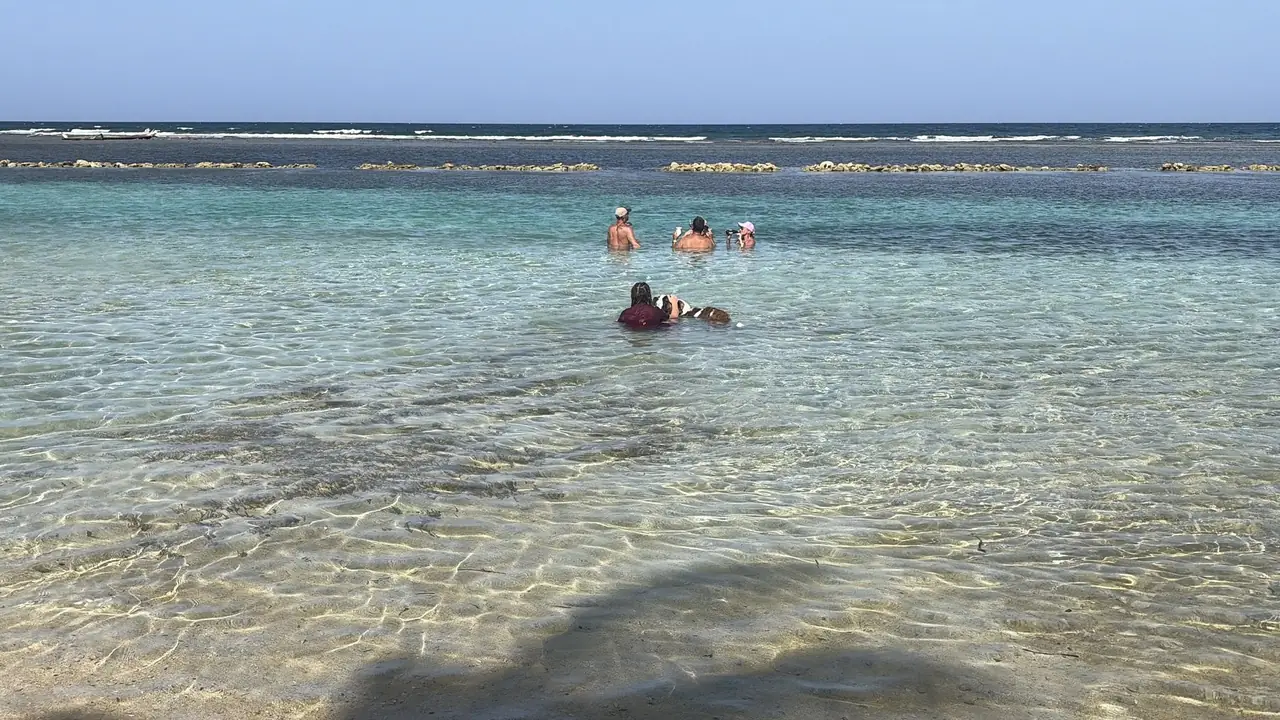
For young kids, this is some of the easiest water on the island to relax around. A mangrove channel leads into a swimming area that's basically three enormous pools of clear, sand-bottomed water, sloping so gradually it never surprises you, topping out around six feet at its deepest. Past a low wall beyond that, the water goes almost flat, just a few inches deep across an area the size of a couple of football fields, where the open ocean rolls in and slows to a crawl before it ever reaches the swimming area. We snorkeled the shallow water and found crabs and small fish everywhere, and out on that shallow flat we watched a three-foot moray eel move through water barely deep enough to cover it, surrounded by brittle stars. Two resident St. Bernards wander the property and will happily join you in the water if you let them.
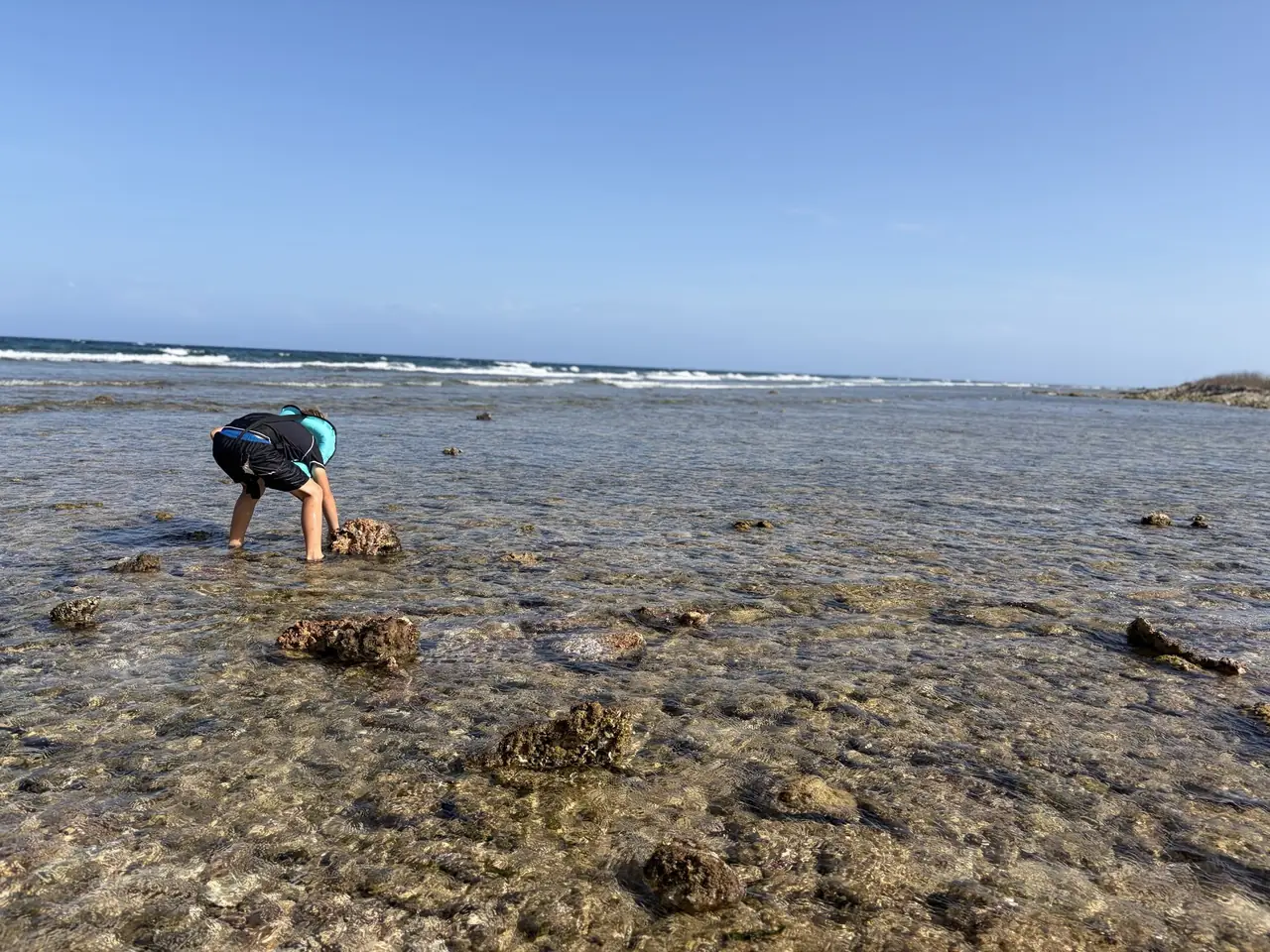
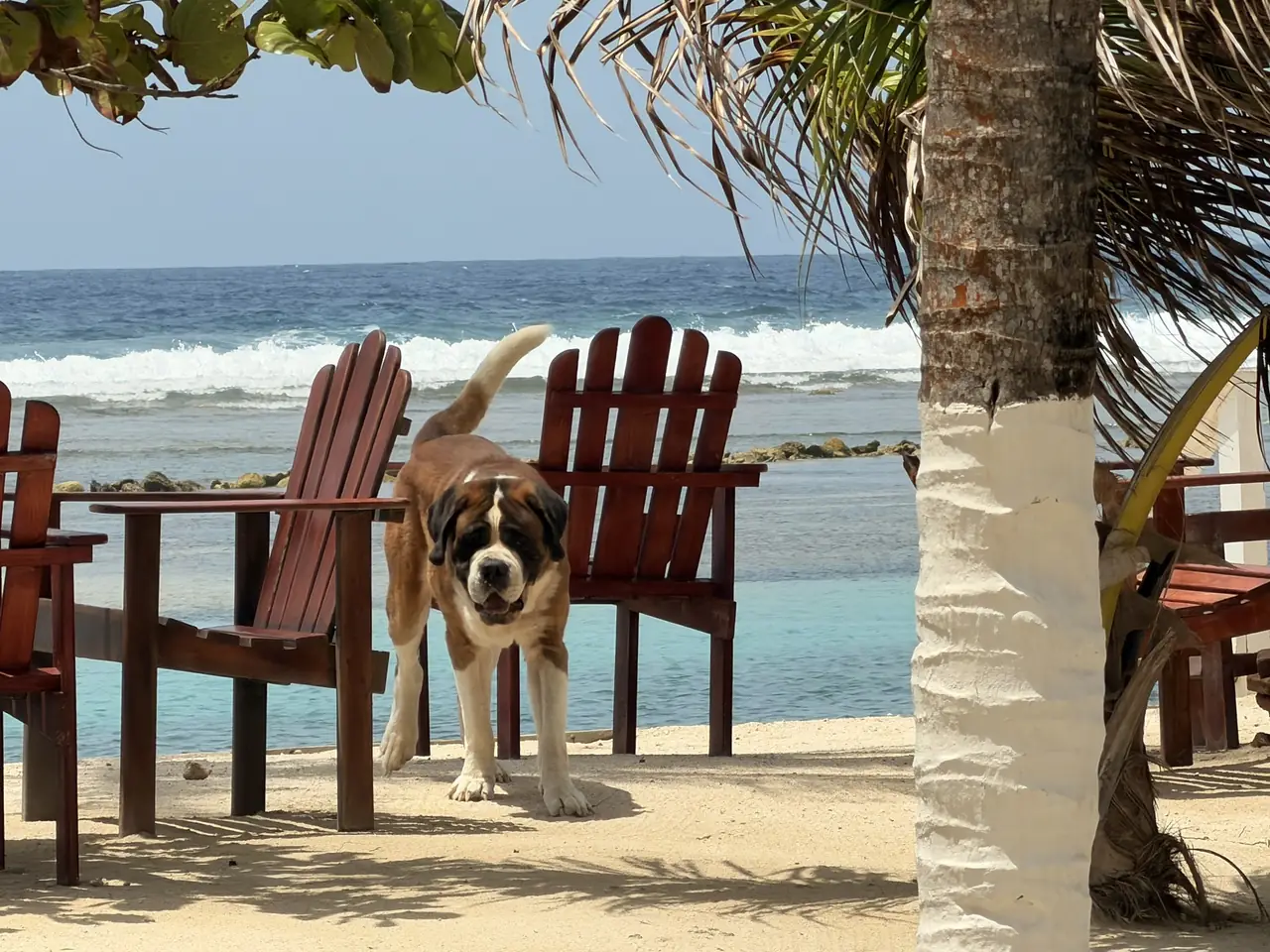
We arrived once on a cruise-ship day expecting crowds and found the opposite. Curación doesn't allow large tour buses, and by the time we left near dark, only two other families had shown up, well spread out.
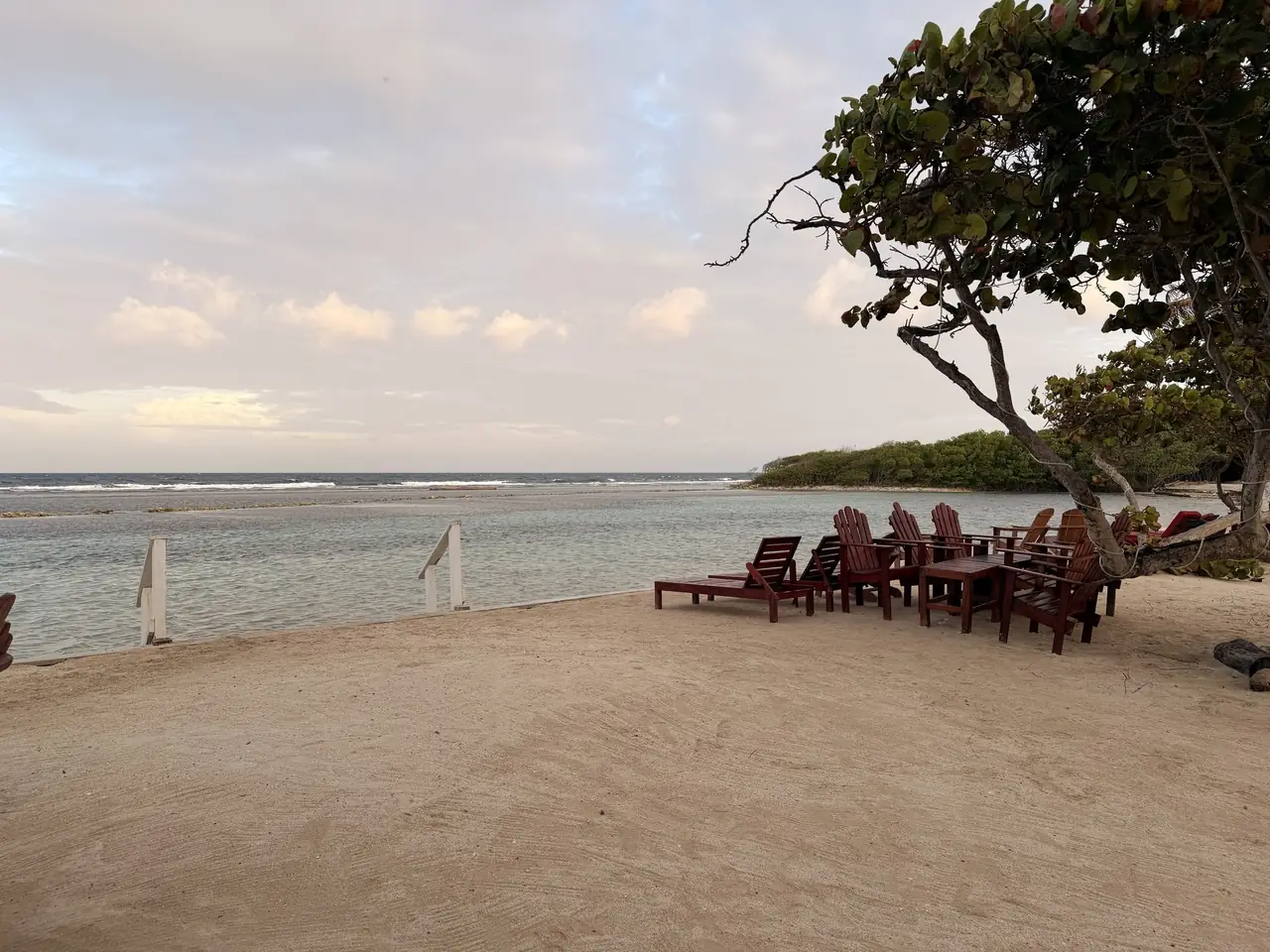
Barefoot Cay is close by, also in Brick Bay, and we're being upfront that we don't have a lived verdict on it yet. Their current rule is thirty dollars per person, paid up front as consumable credit toward food and drinks, available only Monday through Friday between ten and two. A free boat ferries you across in about ten seconds. We showed up on the information we had and were turned away before we got the chance to actually use the place, so consider this the rules as we understand them. We still don't know whether kids are charged the same thirty dollars.
Las Palmas sits in Dixon Cove, close to Coxen Hole and the airport. It's a nice enough resort, with food on site and swings on the beach that our kids liked, but it was the least exciting beach we visited on the island. The water is netted off, so we barely saw any fish or wildlife, and nothing about the place gave us a reason to come back a second time. If you're choosing between this and any other spot on this list, choose the other spot.
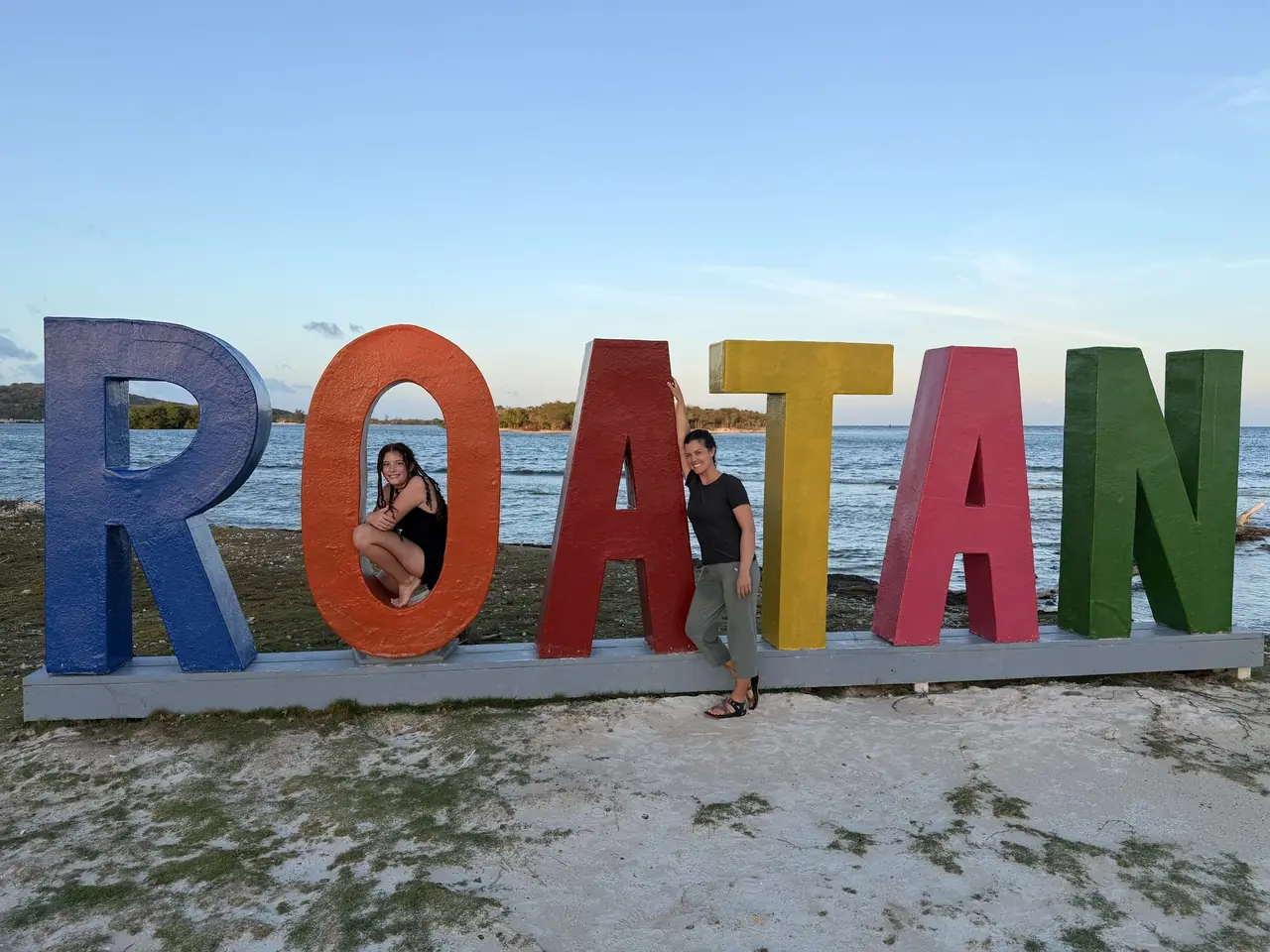
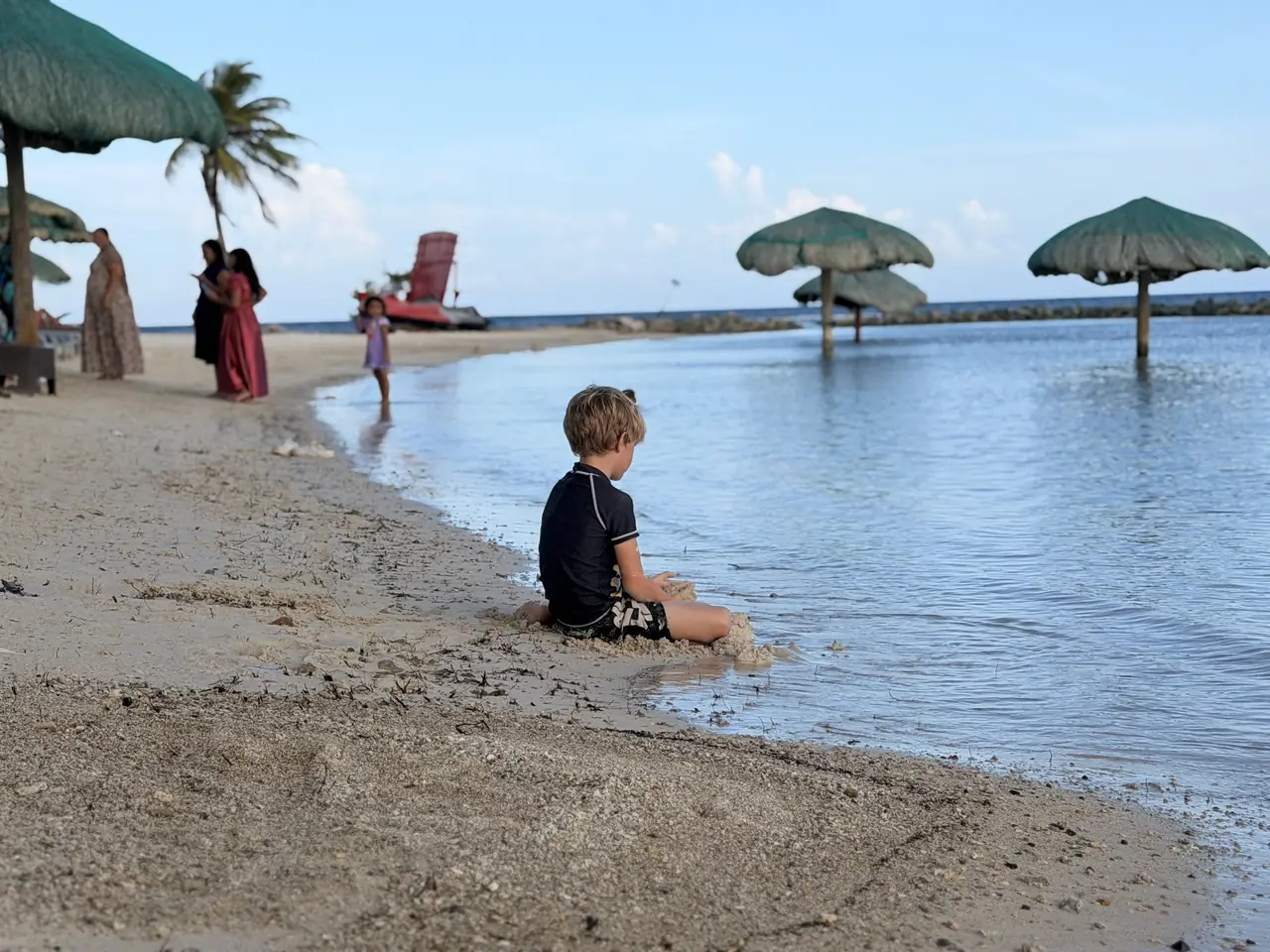
The western tip: West Bay and Starfish Alley
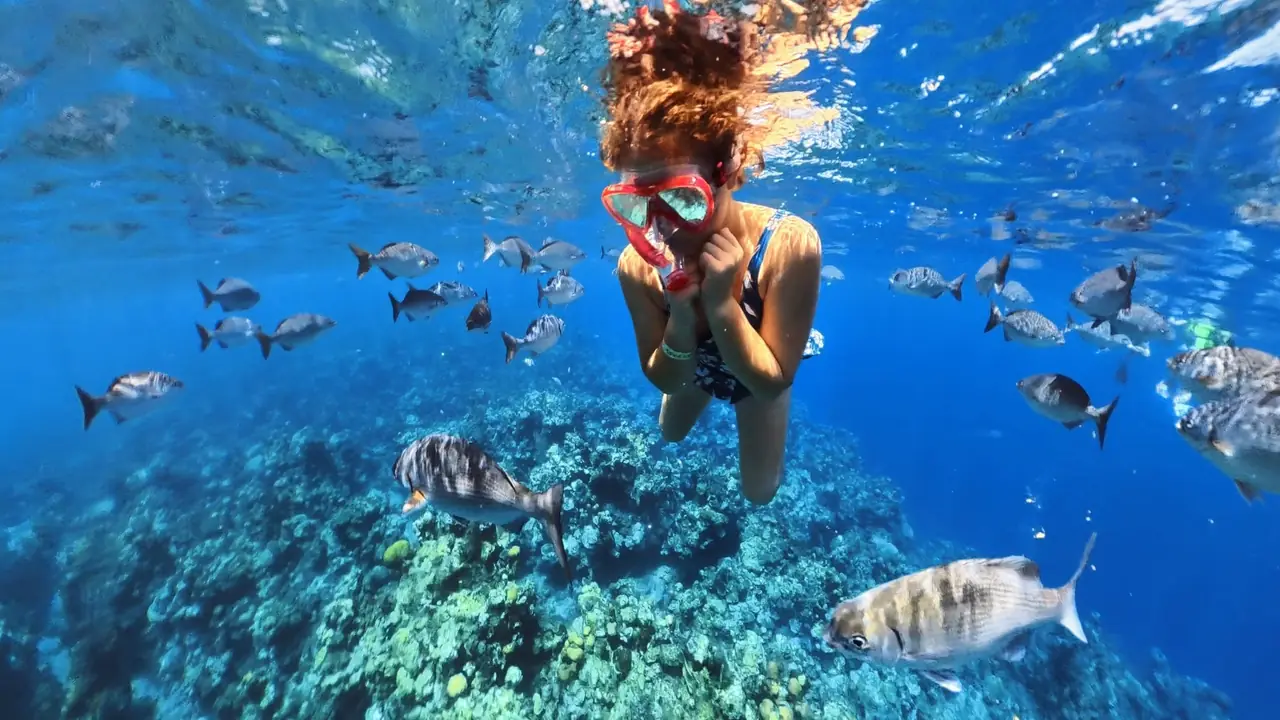
West Bay is the beach most visitors picture when they think of Roatán, and the reef access is why. Only one stretch of the beach is free to park at, on the far end, which means a ten-minute walk to reach the good swimming, but once you're in the water, it's the best off-a-beach snorkeling we found anywhere on the island. We spent six hours swimming that reef in a single day, out toward a drop-off that locals told us runs a hundred feet deep, watching squid and more fish than we could keep track of. You don't need a boat or a guide for any of it.
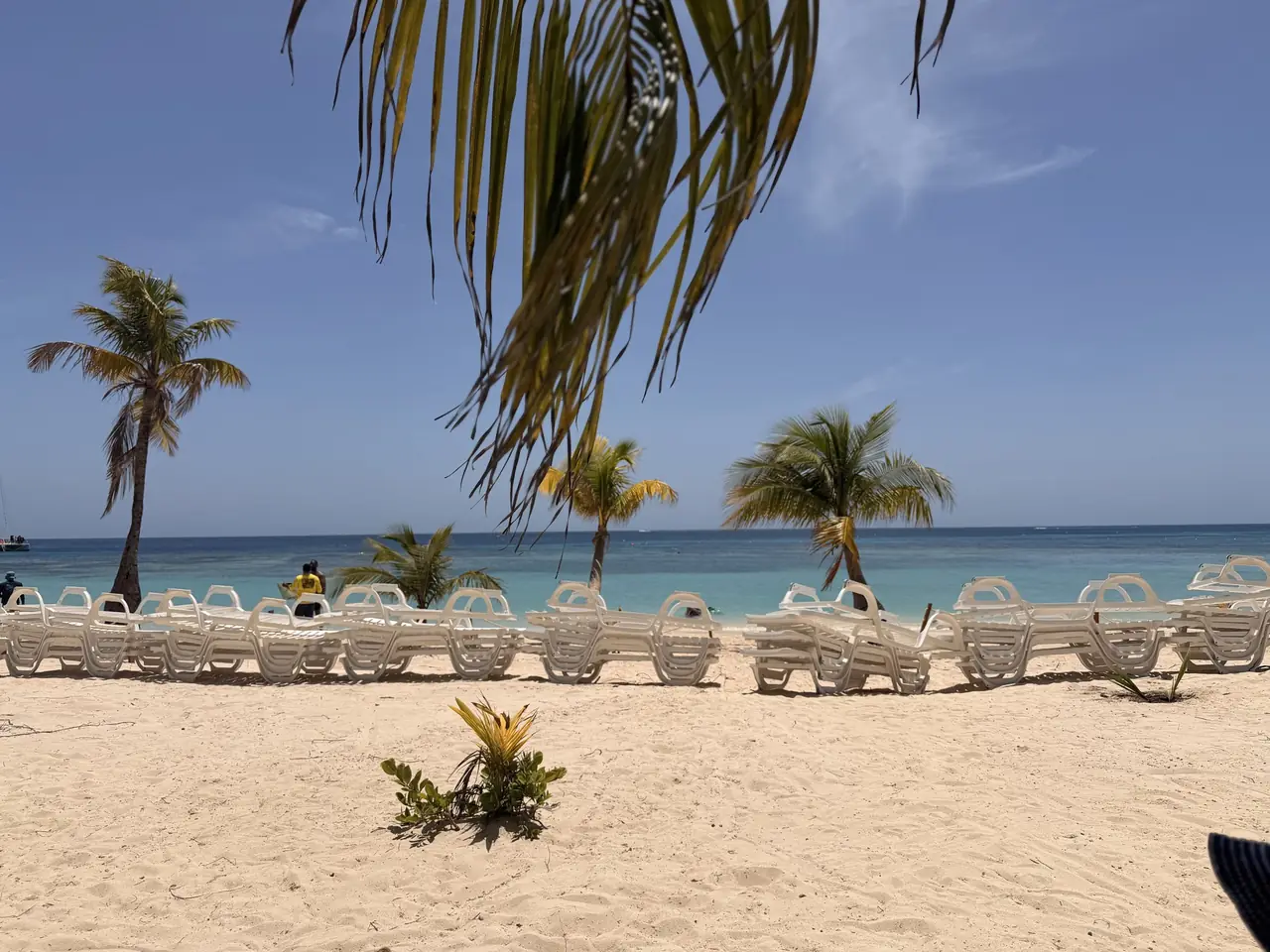
Several of the restaurants along the good stretch will let you buy your way onto their section of beach, and pricing depends on whether a cruise ship is in port that day. At the spot we used, it ran about ten dollars a person on a normal day and twenty-five on a cruise day, plus extra if you want food, and they do charge for kids. That gets you real chairs, free outdoor showers, a bathroom, and a security guard who keeps the beach vendors from bothering you. Another spot nearby, Bananarama, will let you in free on non-cruise days for the price of a drink at the bar, though we've only confirmed that through their manager and haven't used it ourselves. You can also do the whole thing free if you're willing to park at the far end, walk in, and not bring anything you're not comfortable leaving on the sand while you swim.
West Bay is also the busiest and most touristy beach we found, with vendors working the sand and prices that roughly double when a ship is in. We'd plan around the cruise schedule if reef time is the whole point of your visit.
Along the water between West Bay and the West End is Starfish Alley, and here our own knowledge gets thinner. We planned to snorkel it and never made it into the water there. What locals told us is that a lot of the starfish that made the spot famous aren't there in the numbers they used to be, and that it's a better trip by boat from West Bay than by wading in from shore. We looked it up afterward and found reports of fewer starfish there. It's still a shallow, calm place to spend an hour. Just don't go for the photos you've seen of it.
The West End and Sandy Bay
Half Moon Bay sits inside the West End, a walkable strip of one long street with restaurants, cafés, a chocolate shop, and a more local, less polished feel than West Bay a few miles south. We parked at the hospital most times we came, which put us a five or six minute walk from the beach with no trouble finding a spot, free.
The water here has a moderate drop rather than a sharp one, plenty of room close to shore for kids to play, and it gets noticeably deeper once you're more than fifteen or twenty feet out, past where we'd want a non-swimmer wandering unsupervised. Boat traffic stays roughly twenty yards offshore and never felt like a real hazard to us, just background noise more than anything. We never used any of the beach chairs ourselves, but several of the restaurants along the strip will set you up if you buy something. We never spotted a sea turtle here, though locals told us they're around if you get out early and swim where boats can see you. We did watch a manta ray, or possibly a stingray, we honestly couldn't tell which, glide past us just off the dock, which was a highlight.
With more local texture than West Bay, better prices, and calm water that's easy to keep an eye on kids in, that's the west-side beach we'd pick.
Up the coast in Sandy Bay are two places we never got to, Blue Bahia Beach Grill and The Sunken Fish, also known as Tranquilseas. A third, Turquoise Bay Resort, sits further east along the same north shore at Milton Bight. We have no experience with any of the three, and none of them publish anything about whether people who aren't staying there can use the beach.
Timing around the cruise ships
West Bay and the rest of the west end get noticeably busier when ships are in, more buses, more traffic, though never unbearable. The east end barely registers a difference, and Curación and Half Moon Bay stayed relatively quiet even on cruise days. The Roatán Tourism Bureau publishes the arrivals calendar, and it's worth a look before you commit a morning to West Bay or Little French Key.
One more thing on cost
None of the paid spots above run on a fixed system the way a resort day pass usually does. Most of them will let you in for the price of a meal, a few drinks, or in some cases, simply asking what the local rate is instead of accepting the first number you hear. Every time we asked, we got in for less than the posted price.
Beach days are only one line in a budget, and if you're weighing a longer stay we wrote up what Roatán actually cost us with kids over two and a half months on the east end. What we did on the island away from the sand has its own guide too.
Questions we get asked
Do you have to pay to get onto the beaches in Roatán?
Most beaches on Roatán are free to walk onto. At the paid resorts, there is usually no fixed day pass. Buying a meal or a few drinks gets you the beach for the day, and posted prices are negotiable. Asking for the local rate instead of accepting the first number worked every time we asked.
Which beach is best for young kids?
Curación Beach Resort has the easiest water for young kids. It has three graduated sand-bottomed pools that top out around six feet, then a shallow flat beyond a low wall. Almost the entire island is calm because the reef blocks the swell, and Camp Bay and Paya Bay are the only two beaches with any real waves, and even those are small.
Where is the best snorkeling on Roatán?
West Bay has the best snorkeling straight off the beach on the island, no boat or guide needed, out toward a drop-off locals say runs a hundred feet deep. Camp Bay also has a reef, about a hundred and fifty yards out, but it's a real swim through deep, cloudy water with boat traffic. Starfish Alley's starfish numbers are down, and it is better reached by boat from West Bay than waded to from shore.
Do cruise ship days make Roatán's beaches too crowded?
West Bay and the west end get busier on cruise days, with more buses and traffic, but never unbearable, and prices roughly double. The east end barely changes. Curación does not allow tour buses and stayed quiet even on a cruise day. The Roatán Tourism Bureau publishes the arrivals calendar.
How do you get into West Bay Beach for free?
West Bay is free if you park at the far end and walk about ten minutes in. The beachfront restaurants there charge around $10 per person on a normal day and $25 on a cruise day, which covers chairs, showers, a bathroom and a security guard.
How far is Camp Bay from town?
Camp Bay is about 35 to 40 minutes from Coxen Hole, and the drive is mostly paved.
May there be a road.
Related posts

Get new posts by email, a few times a month, nothing else.
May there be a road.