Slow Family Travel in Astoria, Oregon | Our Experience
Preston Clark
·
·
7
min read
·
Astoria and Warrenton, Oregon, at the mouth of the Columbia River

Written for
RV families
·
World travel families
·
Autism families
We left Packwood with mixed feelings, sad to say goodbye to a place we'd grown to love, but eager to finally reach the coast. The plan had been in place for months: time our arrival with the family reunion happening in early August. What we didn't have was a clear sense of where we'd go after that. It was peak summer season along the Oregon coast, and we knew finding quiet spots, especially ones that wouldn't overwhelm Hyrum, would be a challenge. Boondocking felt uncertain. RV parks felt impossible.

But Fort Stevens State Park stood out almost immediately: right on the ocean, tucked into coastal forest, and noticeably quieter than the busy KOA across the street. We took a chance, booked a week, and hoped it would give us both, time with family and the kind of peace our son needs to stay grounded.
Snapshot: Astoria at a Glance
Location: Astoria and Warrenton, Oregon, at the mouth of the Columbia River, where the river meets the Pacific. We stayed inside Fort Stevens State Park, surrounded by dense coastal forest and just a short walk from the beach.
Best For: Families seeking a mix of coastline, quiet forest camping, shipwreck exploration, tide pooling, history, and Astoria's charming riverfront. Ideal for reunions, beach days, and slow evenings around the fire.
Best Time to Visit: Summer through early fall, when coastal fog often burns off in the afternoons and temperatures stay mild.
How Long We Stayed: Seven nights at Fort Stevens on this trip, then another five nights about thirty minutes north, and we still found ourselves driving back to Astoria repeatedly. A month later, we returned again. All told, we've spent about two weeks in and around Astoria, and it still feels like a place that could easily take a full month.
Why We Chose This Place
We chose Astoria for two reasons: the family reunion happening in early August, and the town itself. Astoria sits right where the Columbia River meets the Pacific, steeped in maritime history and surrounded by rugged coastline. It's also one of the most accessible coastal towns from I-5, which made it a natural starting point as we began our time along the Oregon coast.
When it came to where we'd actually stay, Fort Stevens State Park stood out immediately. We knew the rest of the family would be at the KOA across the street, but we needed something quieter for Hyrum. We needed space, shade, and the kind of natural calm that helps him stay grounded. The state park offered exactly that: forest loops, paved trails to the beach, and enough distance from the noise and activity of a busy RV resort.
Outdoor Adventures and Things to Do
The rusted skeleton of the shipwreck of the Peter Iredale rises right out of the sand, dramatic and unforgettable. Hyrum spent hours stamping and splashing through the shallow water around the wreck, completely in his element.
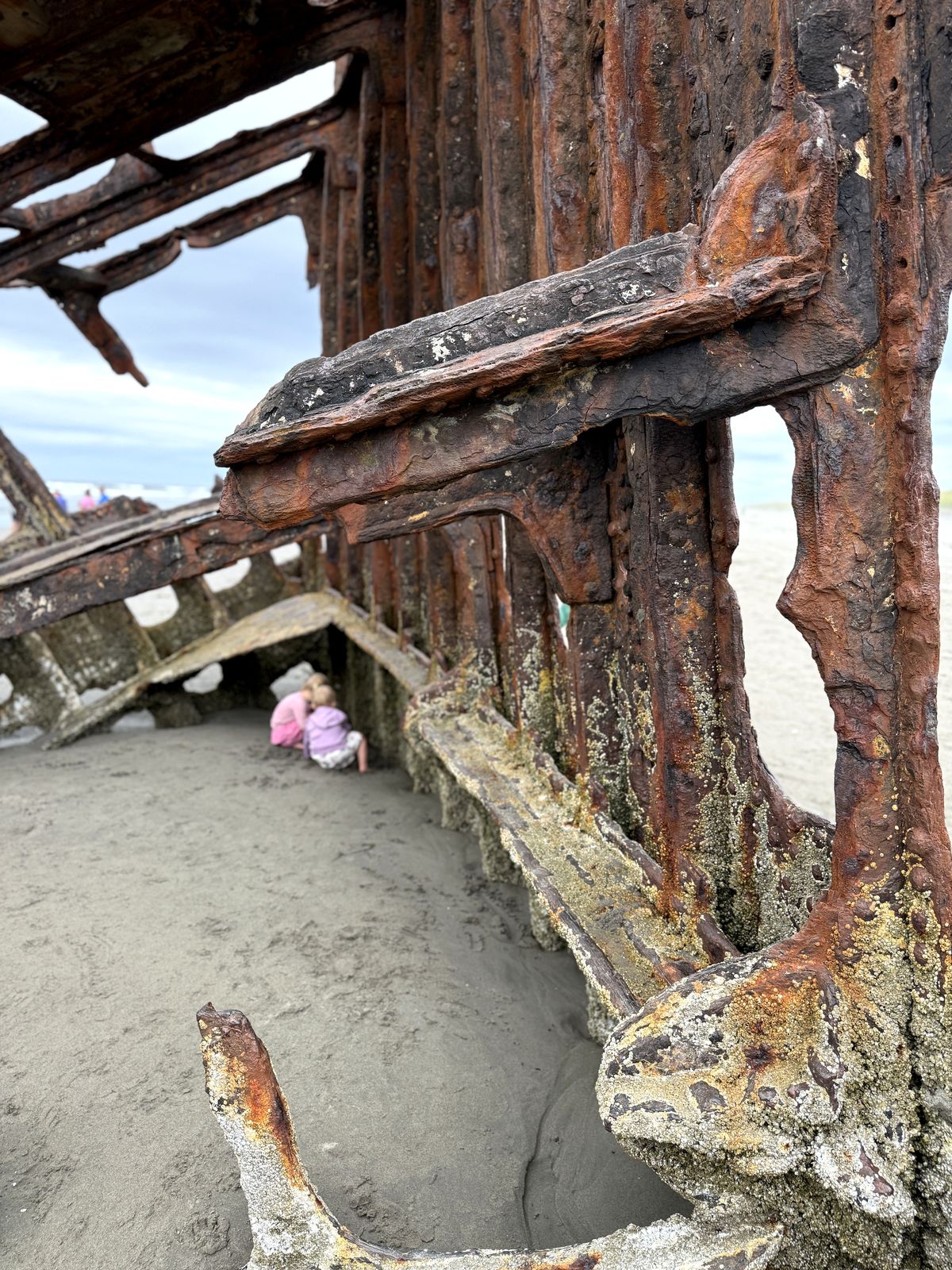
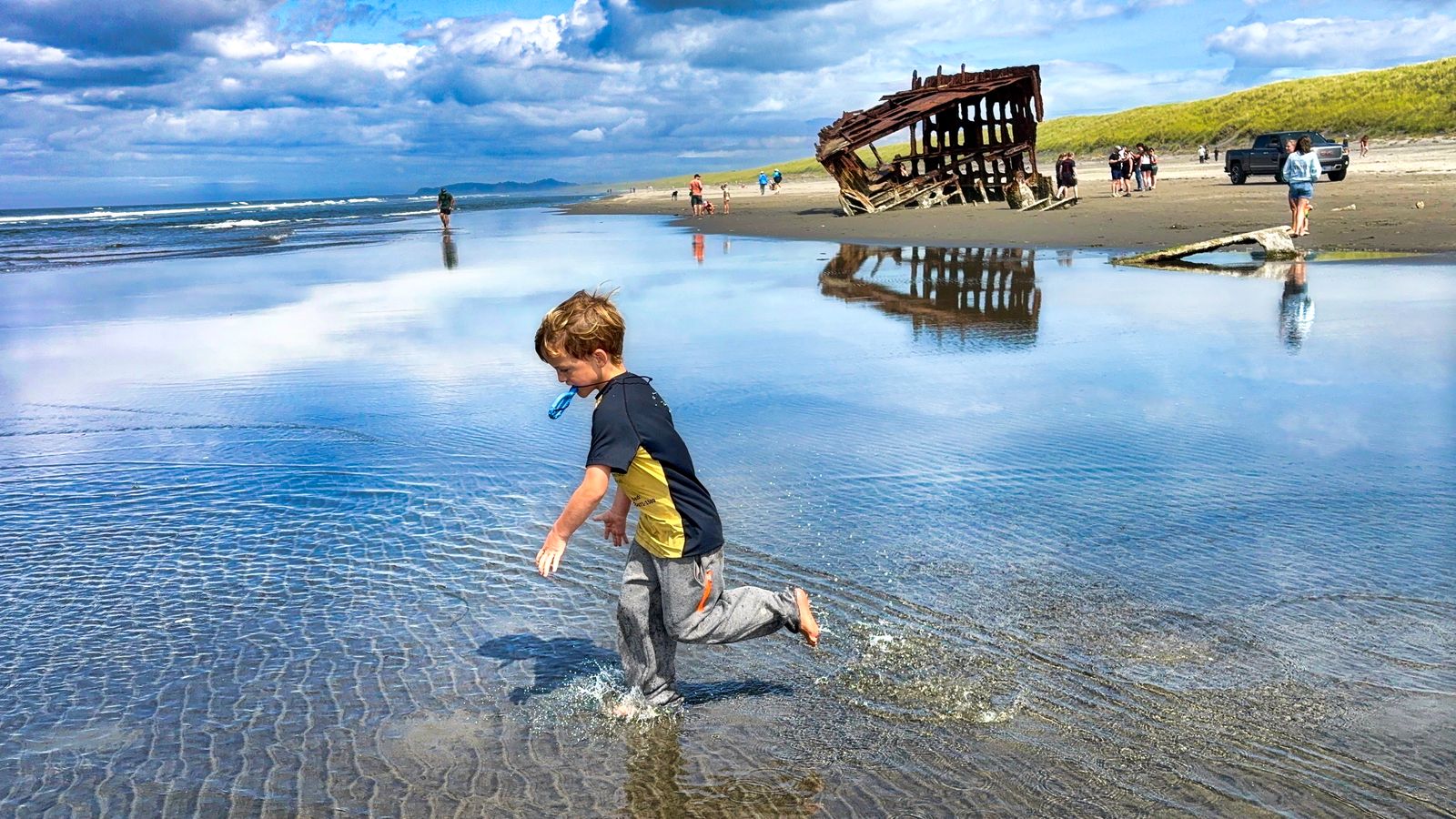
Fort Stevens Beach gave us hours of cousin time on the clear days, digging, building, and chasing waves. We were washed out by classic Oregon coast rain on other days, but even that felt right for this dramatic place.
We discovered something unexpected in this stretch of coast: miles of beach you can actually drive on, at several access points between Fort Stevens and Gearhart. The one exception is the very north end at Fort Stevens, where you have to arrive before noon if you want to drive toward the Columbia River jetty. The beaches are wide and open, with no real coves or protection from the wind, but drive a little ways and you'd find yourself surprisingly alone even during the busy summer season.
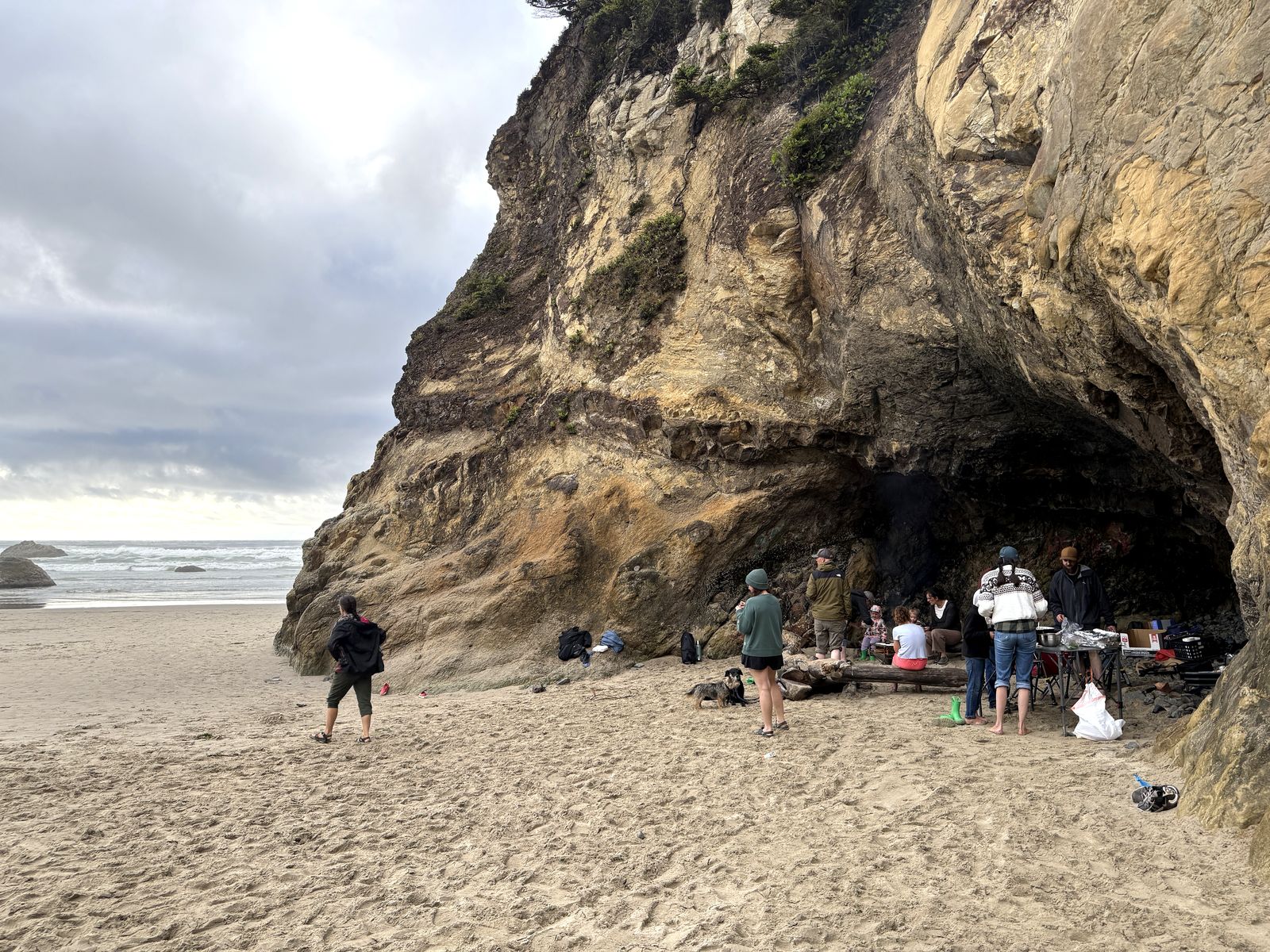
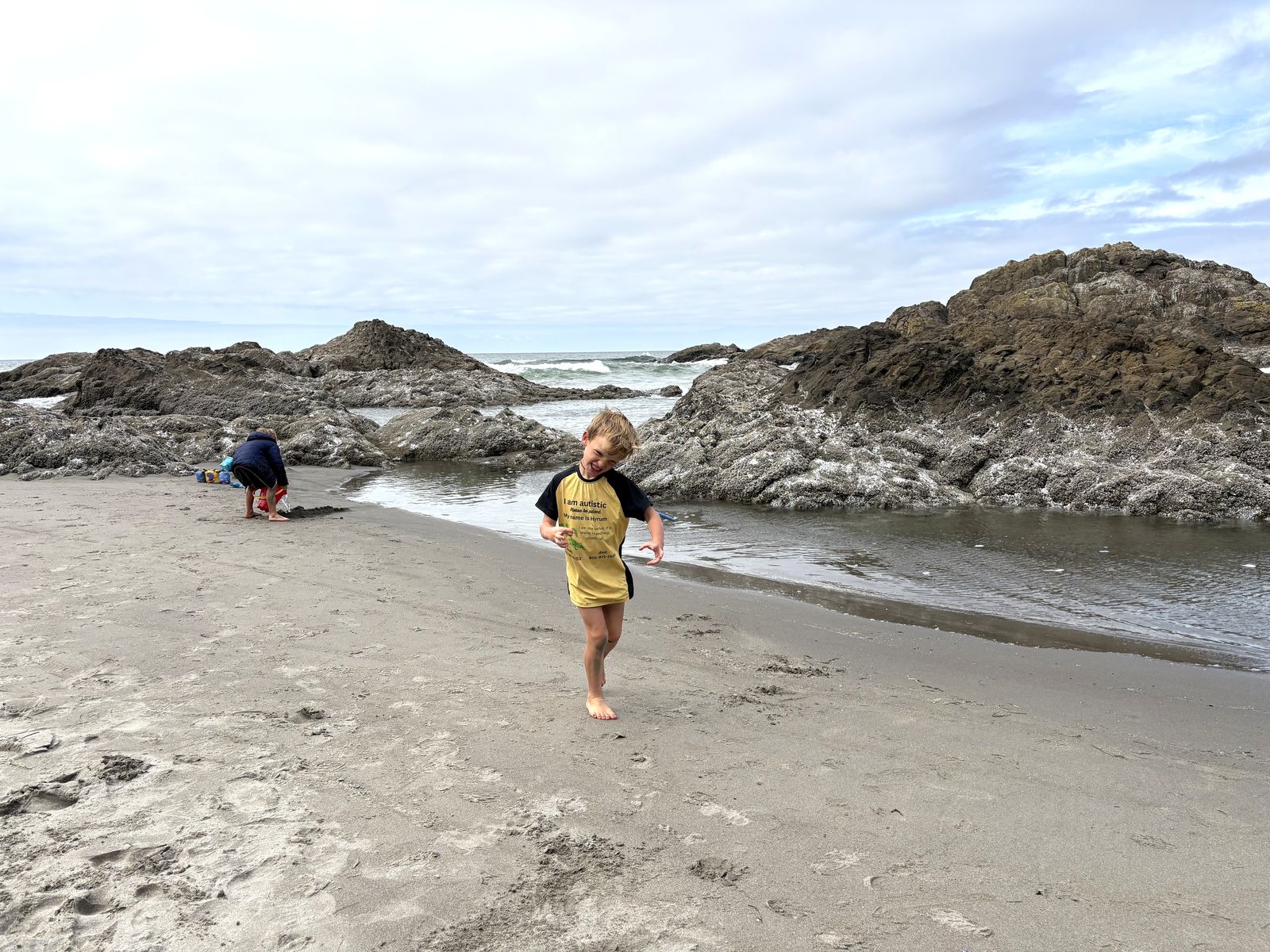
Hug Point became the highlight of our trip. At low tide, the coastline reveals hidden corners: tide pools full of life, exposed rock formations, a waterfall tumbling straight onto the beach, and sandstone curves you can only reach when the water retreats. Hyrum spent hours digging out crabs and tiny fish. Later, our extended family gathered in a beach cave, cooked dinner over a fire, and listened to the waves echo beyond the entrance.
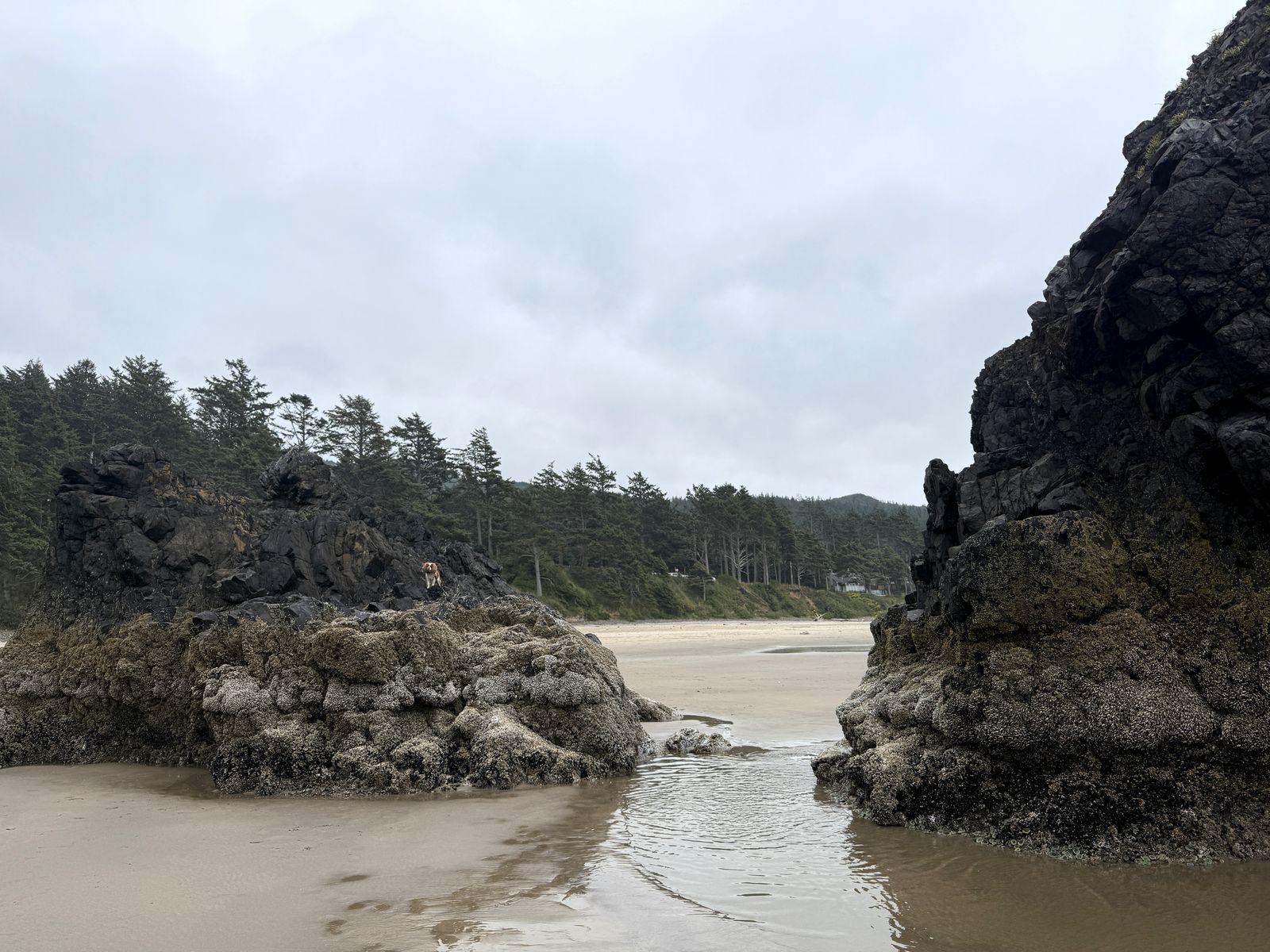
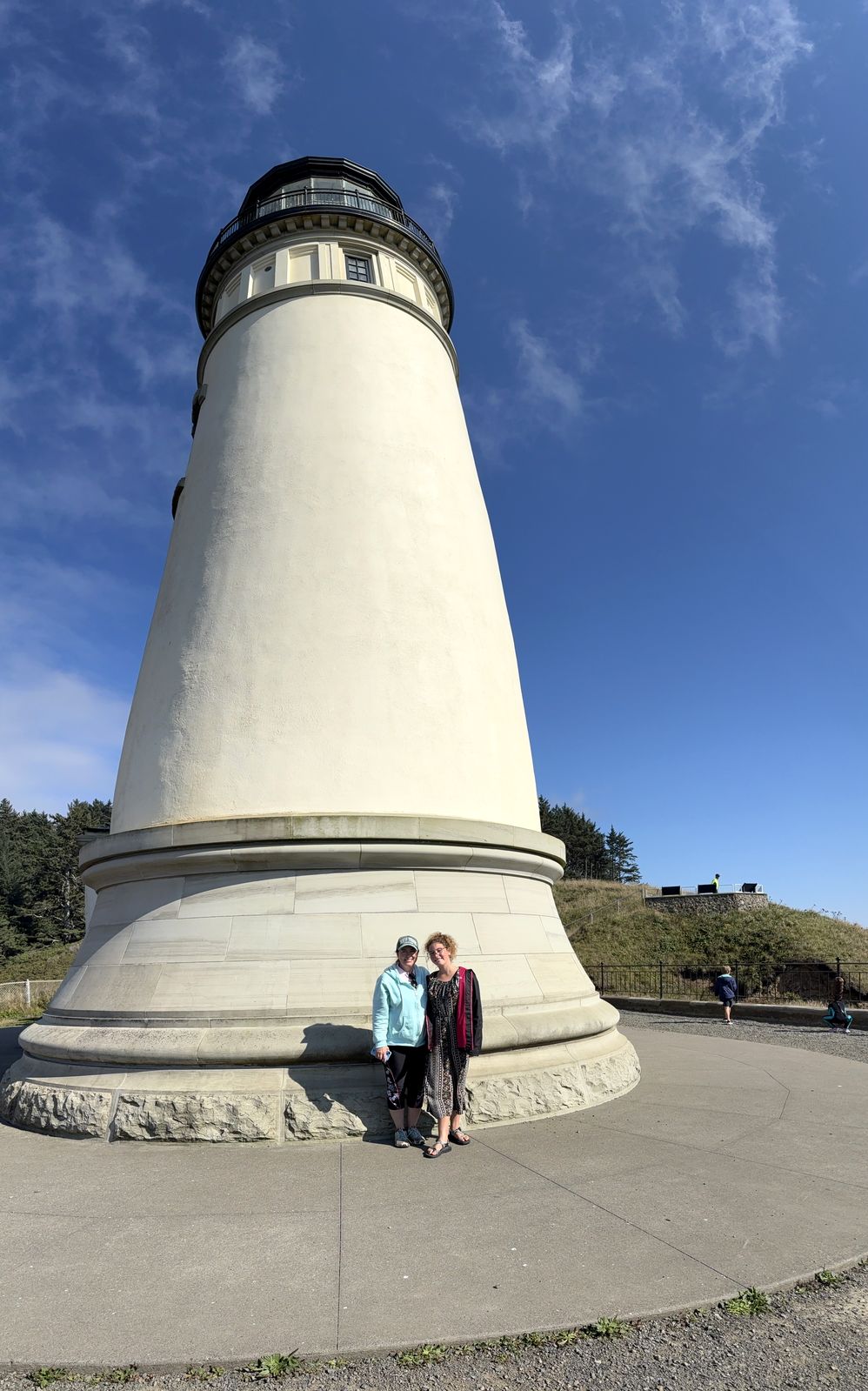
We crossed into Washington several times to explore Cape Disappointment State Park. Both lighthouses, North Head and Cape Disappointment itself, were worth the hikes, with sweeping views overlooking the mouth of the Columbia River. But Benson Beach and the tide pooling just north of Cape Disappointment were the real treasures. Benson Beach is one of the few beaches that allows driving, which made accessing the best tide pools incredibly easy. At low tide, the rocks revealed crabs, anemones, starfish, and fish darting through shallow pools, hands down the best tide pooling we'd seen up to that point.
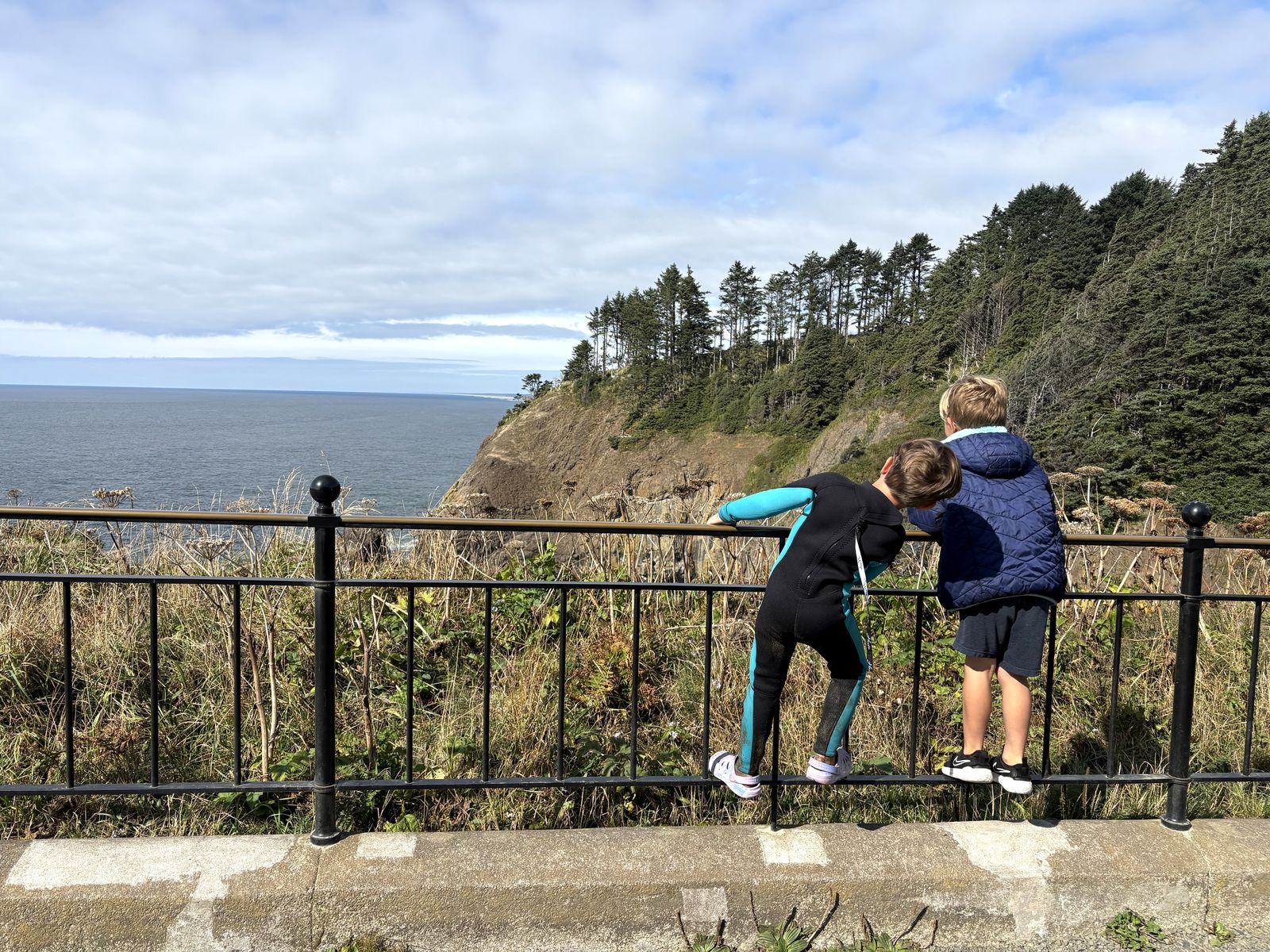
We made it a point to visit nearly every well-known beach within an hour south of Astoria. Seaside was busy and classic. Cannon Beach, with its iconic Haystack Rock, was stunning, worth the visit just for the tide pools around the base and the dramatic sea stacks stretching down the coast. Ecola State Park offered beautiful forested trails and access to beaches framed by cliffs. Arcadia Beach was quieter, with limited parking keeping the crowds down, and its own tide pools and small cave structures carved into the cliffs.
The old military bunkers scattered through Fort Stevens are fascinating for kids and adults alike. The visitor center had wonderful exhibits and Junior Ranger booklets. And the paved forest trail from our campsite to the beach became one of our favorite daily routines, quiet, calming, and surrounded by towering coastal trees.
One evening, Preston and Brittney went to the annual Shanghai play at the little local theater, quirky and full of character, though not entirely our style. Leaving early turned into a blessing. We ended up walking the docks, picking blackberries, and taking in sweeping views of the Columbia River and the iconic bridge. Meanwhile, Preston and Eden shared a father-daughter date at Movie in the Park, making memories of their own.
Community and Culture
Astoria and Warrenton felt like a blend of everything: charming, busy, historic, industrial, and completely unique. Fishing boats, river traffic, local shops, small playhouses, food trucks, and families doing life along the water created a town full of character.
What stood out most was the art. Astoria has a creative layer that many smaller coastal towns lack: galleries, murals, quirky theaters, and a thriving arts scene woven right into the maritime culture.
If you prefer quiet and nature over bustle, Astoria won't be your top choice. Just thirty minutes north, Long Beach, Washington felt like a quieter alternative. Ilwaco, tucked inland from the beach, offered even slower camping options for those looking to escape the crowds altogether. Fort Stevens added another layer: quiet forests, misty trails, open campsites, and the calming hum of coastal trees. Together, they made the area feel rich, alive, and deeply welcoming.
The Homeschool Scene
Even though this stop was centered around family time, it naturally turned into a stretch full of learning. The kids started their Junior Ranger booklets at the visitor center, sparking conversations about coastal defenses, wildlife, and the history of the park.
Astoria has a good sized library and a visible homeschool community. We didn't integrate as much as we normally would, our visits were shorter and split across multiple trips, but in our research, we found homeschool families active on Facebook, and the library mentioned several programs they participate in. There are also museums worth exploring for hands-on learning, especially the Columbia River Maritime Museum.
Every activity we did offered a lesson. The Peter Iredale shipwreck opened the door to maritime history. Tide pooling at Hug Point and Cape Disappointment brought ocean ecology to life. Forest walks taught us about plant life, erosion, and coastal habitats. Blackberry foraging turned into a mini lesson on local plants. The Columbia River offered endless geography discussions.
Foodie Finds
Most of our meals were simple camp dinners, but the ones that stand out were unforgettable. Dinner cooked over the fire inside the Hug Point beach cave felt ancient and magical, a memory we'll carry forever. We did this on several beaches during our time here, building fires right on the sand and cooking while the kids played in the surf.
Astoria's downtown is lined with food trucks near the riverfront, and we tried a few during our visits. Everything we sampled was great. Along the riverfront, we picked blackberries right off the bushes, warm from the sun. And near the base of the Astoria Megler Bridge, we passed a lively parking area filled with food trucks offering fresh fruit, smoothies, fries, and rotating local treats. Preston and Eden grabbed fries there on their date night.
Where We Stayed
We stayed at several locations during our time in the Astoria area, each offering something different.
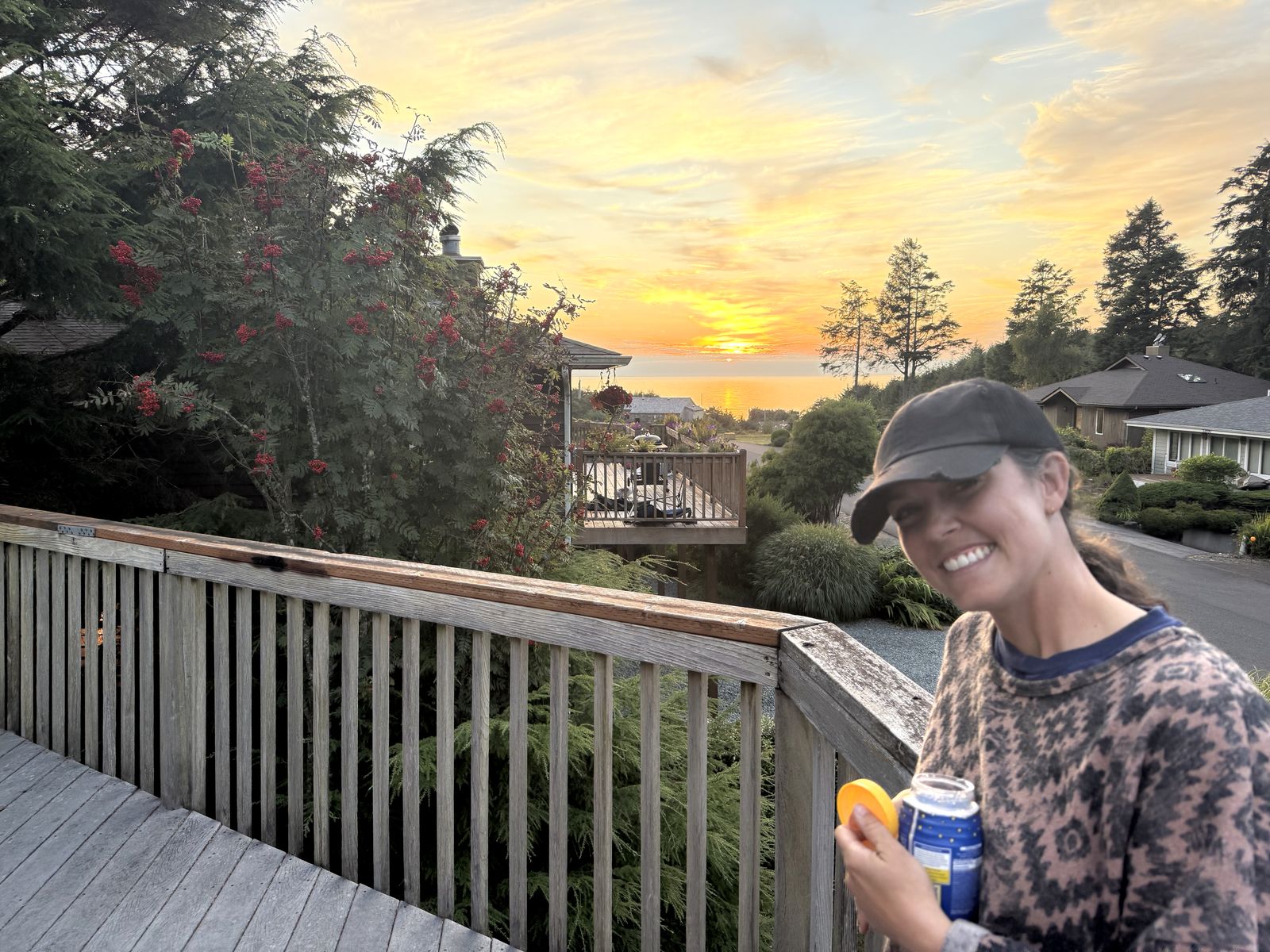
Fort Stevens State Park was our home base for the family reunion. Our campsite was everything we hoped it would be: quiet, shaded, and surrounded by tall shrubs heavy with berries. We appreciated the one-direction traffic flow, which eased some of the constant mental load of watching out for vehicles with Hyrum. The paved bike path to the beach was our favorite feature. We had water and electric hookups but no sewer, which is common in the park.
The Astoria and Warrenton KOA is where the rest of our extended family stayed, and we visited often during the reunion. It was one of the nicest KOAs we've seen: great facilities, pools, playgrounds, and exceptionally clean overall.
Wallicut River RV Resort in Ilwaco was another spot we stayed during one of our visits. Right off Highway 101 heading toward Long Beach, it's a nice grassy area with spacious RV spots, quiet, simple, and accessible.
As far as we could find, legitimate boondocking wasn't available close to the coast. You have to head inland a bit to find those options.
Closing Thoughts
Fort Stevens reminded us how deeply we need both family and quiet places. The reunion filled our kids with joy and gave us precious moments with loved ones. Yet it was the forest, the ocean, and the stillness of the state park that steadied us.
This stop gave us the best of both, connection and calm, laughter and rest. As we drove north with no set destination, we carried both kinds of strength with us: the gift of family, and the grounding peace that only creation can offer.
How this place worked for a high-support-needs kid
Regulation
Mostly
Autonomy
Mostly
Sensory load
Mixed
Daily rhythm
Mostly
Related posts
Get new posts by email, a few times a month, nothing else.
May there be a road.