Best Age to Buy a Used RV: How to Limit Depreciation
Preston Clark
·
·
4
min read
·

Written for
RV families
What is the best age to buy a used RV? For most families, I recommend starting around five to ten years old. That is the range I tend to look at after living in RVs and working on both the dealership and repair sides. It is not a magic cutoff, and age alone cannot tell you whether a particular RV is a smart buy.
The goal is to buy after much of the steep early depreciation has passed, while still finding a rig that fits the way your family plans to travel. Then condition, service history, price, and your repair budget decide whether that specific RV makes sense.
Why we start around five to ten years
New RVs often lose value fastest in their first few years. As a broad rule of thumb, I use a first-year depreciation range of about 15 to 25 percent. On a $120,000 RV, that would be $18,000 to $30,000. Actual values vary by RV type, make, condition, and the market. J.D. Power's RV valuation tools can help you compare a particular model year, but I would also look at current comparable listings.
In my experience, the steepest part of the curve usually happens early, then the loss slows. Around five to seven years old, the major factory defects have often surfaced, and used values tend to settle compared with the first few years. I have seen that from the dealership and repair sides as well as from owning RVs. Those are patterns I have observed, not a promise that a specific five-year-old rig is reliable or that its value will stop falling.
The RV Industry Association's shipment reports give useful context about broad supply cycles. In our experience, those shifts matter in the used market too. A shipment report does not tell you the value of one RV, so compare the exact make, model, year, condition, and current market before settling on a price.
Older can still be the better buy
There is nothing automatically wrong with an RV that is more than ten years old. The purchase price and depreciation may be lower, but maintenance history and condition become even more important. Look closely at the roof and seals, signs of water intrusion, slides, appliances, plumbing, electrical systems, and the availability of parts. Some campgrounds also have age or appearance rules, so check the places where you expect to stay.
An older RV can be a great value when it has been cared for, passes inspection, and leaves room in your budget for repairs. A newer RV with a hidden leak or poor maintenance can cost more. If you need lithium batteries, solar, or another upgrade for the way you camp, include that cost in your comparison rather than assuming a newer rig has the setup you want.
The inspection matters more than the model year
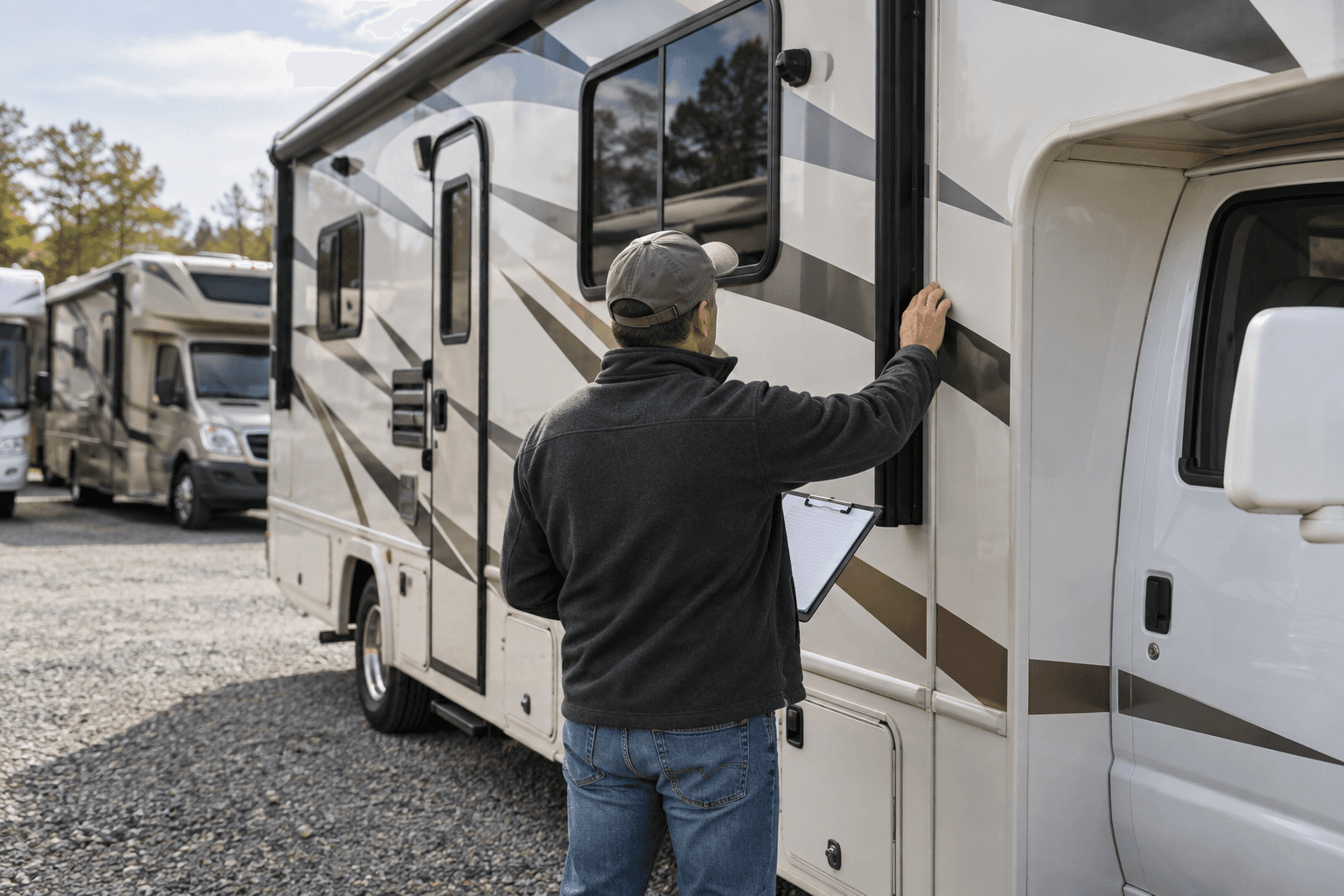
Before buying, arrange an independent inspection unless you have the experience to evaluate the RV yourself. Ask the inspector for the points they cover, a sample report, the exact price, and any travel fees. Check that the agreed scope covers the roof, seals, signs of water intrusion, slides, frame and undercarriage, electrical and propane systems, and appliances. Ask which tests are included because inspection scope varies.
An inspection gives you better information before you commit. It does not guarantee that every hidden or inaccessible problem will be found. The National RV Inspectors Association's standards explain the scope and limits of its inspections.
How we apply this
We paid $30,000 cash for our current RV and plan to keep it roughly two years. Our goal is to limit what we lose while we use it. That is one example of how we approach the purchase, not a promise that another RV will hold its value the same way.
So what age would I shop for first? Usually five to ten years old. Then I would let the condition, maintenance records, inspection, and actual price decide. A used RV can still be a poor financial choice if its price is too high or if the loan leaves you without a practical exit. Our guides on new versus used RV costs and financing an RV cover those bigger calculations.
For us, the age range is a starting point. The right buy is a well-maintained RV at a fair price, with repair money left over and a clear plan for what happens when it is time to sell.
Related posts


Get new posts by email, a few times a month, nothing else.
May there be a road.